Procurement decisions in large-scale flooring projects carry weight that extends far beyond the initial transaction. When materials arrive with production inconsistencies, when a defect surfaces mid-installation, or when a supplier goes quiet the moment a shipment clears customs — the consequences ripple outward across timelines, subcontractor relationships, and client trust. For contractors, building material distributors, and project procurement managers, evaluating a WPC Flooring Manufacturer on after-sales capability is not a secondary step in the sourcing process. It is, in many respects, a particularly consequential one. What follows is a structured look at what experienced buyers actually require, and where supplier support systems commonly fall short.
What Is WPC Flooring and Why Support Requirements Differ
Understanding the Material Before Evaluating the Supplier
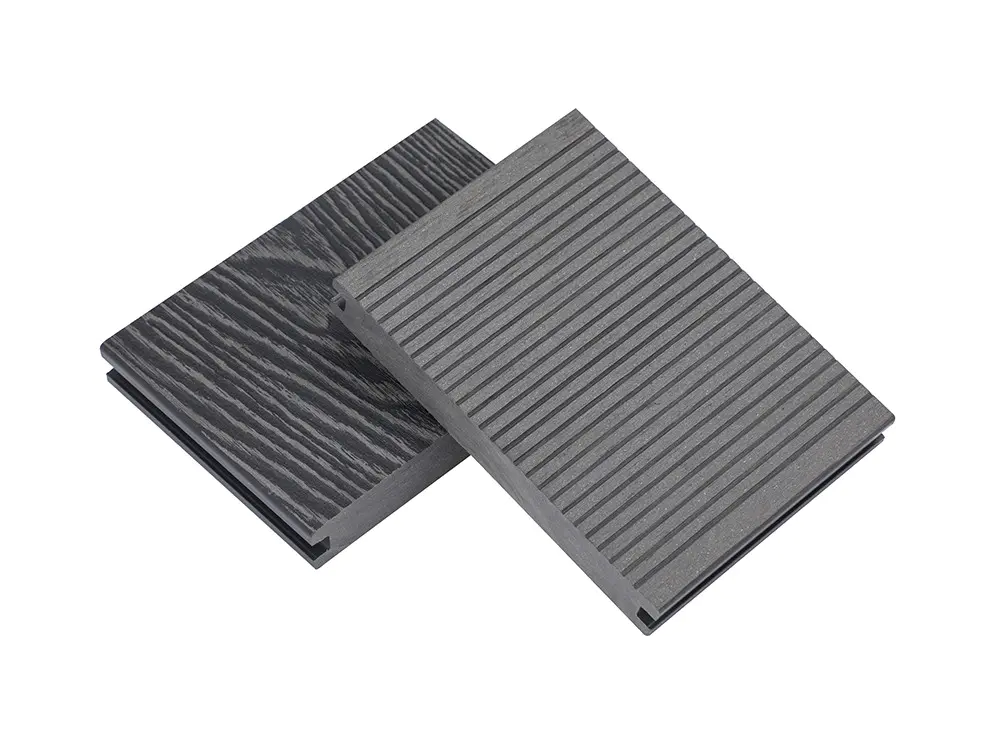
WPC flooring — Wood Plastic Composite — combines a polymer core with wood fiber content to produce rigid planks that resist moisture, handle dimensional stress, and deliver a natural surface aesthetic. The composite structure makes it well suited for kitchens, bathrooms, high-traffic commercial areas, and residential renovation projects where standard laminate or hardwood would be problematic. What Is WPC Flooring in practical installation terms, though, is a product that interacts meaningfully with subfloor conditions, temperature during installation, and expansion gap management — variables that standard product documentation alone does not fully address.
This is directly relevant to after-sales support. A material with real installation sensitivity creates real post-delivery support requirements. Suppliers who understand the product's behavior in field conditions are far better positioned to help buyers navigate problems than those who can only describe it in technical specification terms.
How WPC vs SPC Flooring Shapes Support Expectations
The WPC vs SPC Flooring comparison comes up frequently among buyers who are deciding between rigid-core categories. SPC — Stone Plastic Composite — uses a denser mineral core, making it dimensionally harder and somewhat less forgiving of subfloor imperfections. WPC's slightly softer core offers better underfoot comfort but requires closer attention to subfloor flatness and moisture conditions during installation.
From a supplier support standpoint, this distinction matters because installation guidance for WPC flooring needs to be specific to WPC. A supplier whose technical team treats all rigid-core formats as equivalent — offering generic floating floor instructions regardless of core composition — will not be equipped to help when WPC-specific issues arise. Buyers sourcing China WPC Flooring for complex project environments should probe this directly during vendor conversations.
Why After-Sales Support Has Become a Differentiator, Not a Given
GAP
The Gap Between Sales Promises and Operational Reality
Most WPC Flooring Supplier proposals emphasize product quality, competitive pricing, and production capacity. Fewer provide detailed accounts of how they handle post-shipment defects, batch inconsistency claims, or installation failures. This gap between what suppliers communicate before the order and what they deliver after it is a common source of procurement regret in the flooring category. Buyers who have worked through one problematic supplier relationship understand this instinctively. Those who have not yet encountered it at scale sometimes make sourcing decisions based primarily on sample quality and price — two factors that tell almost nothing about how a supplier will behave when something goes wrong.
COST
Project Conditions Amplify the Cost of Poor Support
A delayed resolution on a standard retail order is inconvenient. The same delay on a construction project can idle installation crews, push a project past its contracted completion date, and create penalty exposure for the buyer. When a defective flooring batch is identified after partial installation has already begun, the replacement logistics — sourcing matching material, coordinating reinstallation, managing subcontractor time — compound the original problem significantly. Suppliers who build genuine urgency into their after-sales response process understand this pressure. Those who do not tend to treat every claim as an administrative exercise with a standard processing timeline, regardless of the project context.
Core After-Sales Support Areas: What Buyers Should Evaluate
Warranty Terms That Reflect Real Project Conditions
Warranty documentation from flooring suppliers ranges from genuinely protective to functionally meaningless. A warranty that covers manufacturing defects under a narrow definition, excludes anything related to installation conditions, and requires documentation that is difficult to produce in practice provides little actual protection for project buyers.
What buyers working at project scale need from warranty coverage:
- Structural and surface defect coverage that applies to field conditions, not just controlled samples
- A defined claim process with clear documentation requirements and realistic timelines
- Replacement material sourced from a production batch matched to the original order
- Explicit coverage for defects identified after partial installation has begun
- Named escalation contacts rather than generic customer service addresses
A China WPC Flooring Manufacturer with serious export operations should be able to provide warranty documentation in English, with specific rather than vague language about what triggers coverage and what excludes it.
Batch Consistency: The Problem Buyers Discover Too Late
Color and finish variation between production runs is a frequently cited post-delivery complaint in large flooring projects. The problem is structural: flooring is manufactured in batches, and natural variation in raw materials, dye lots, and production conditions means that planks from different runs may differ in ways that are subtle in isolation but obvious when installed side by side across a large area.
Buyers rarely discover this during sample evaluation. They discover it when the second container arrives. Suppliers who manage this well have operational systems in place to support buyers through it:
- Production scheduling that consolidates large orders within a single manufacturing run wherever possible
- Pallet-level batch documentation that allows installation crews to sequence material by run
- Pre-shipment color comparison against the approved reference sample
- Clear communication protocols when batch variation exceeds acceptable tolerance
These are not exceptional measures — they are standard practices among manufacturers who have worked through enough large projects to understand what creates problems downstream.
Technical Installation Support: Before, During, and After
The installation phase is where WPC flooring project problems frequently surface. Planks that buckle after a few weeks, click-lock connections that open under load, or edge chipping during cutting — these failures almost always have a specific cause rooted in installation conditions, product handling, or subfloor preparation. The question is whether the buyer can access the technical knowledge needed to diagnose and resolve them quickly.
Practical technical support from a WPC Flooring Supplier includes several distinct elements:
- Installation documentation that addresses subfloor moisture thresholds, flatness tolerances, acclimation time, and expansion gap requirements for the specific product format
- Accessible technical contacts — not just a general email address — who can respond to field questions with real product knowledge
- Willingness to review project-specific conditions: floor type, heating system underneath, regional climate, and room dimensions
- Post-installation maintenance guidance that buyers can pass to end clients
This depth of support is consistently more available from factory-direct suppliers than from trading intermediaries, who often lack in-house technical personnel with product-level knowledge.
Factory-Direct vs. Trading Company: How Support Capabilities Compare
For buyers who are still deciding between sourcing channels, the after-sales support comparison between factory-direct manufacturers and trading intermediaries is clarifying.
| Support Area |
Factory-Direct WPC Flooring Manufacturer |
Trading Company |
| Warranty handling |
Direct access to production records and replacement stock |
Dependent on factory cooperation; delays common |
| Batch consistency control |
Can schedule production to consolidate large orders |
Influence over factory scheduling is limited |
| Technical support |
Product engineers and installation specialists available internally |
Typically relies on forwarding factory documentation |
| Defect resolution speed |
Decisions made internally; faster escalation path |
Additional communication layers slow the process |
| OEM and custom dimensions |
Directly negotiable with production management |
Subject to factory approval; limited flexibility |
| Communication clarity |
Single point of accountability at source |
Multiple parties involved, responsibility can be diffused |
Trading companies serve a legitimate function in the market — particularly for buyers sourcing small quantities across multiple categories. For project-scale procurement where after-sales performance has material consequences for project delivery, factory-direct relationships offer a cleaner accountability structure.
Logistics and Delivery Support: Frequently Underestimated
SHIP
Shipping Damage Is Not an Isolated Risk
Flooring products are genuinely vulnerable during ocean freight. Planks with chipped edges, cracked cores, and moisture-related warping are documented outcomes of inadequate export packaging and poor container loading practice. When this material arrives on a project site, the buyer faces not just replacement cost but the delay and logistics involved in sourcing matched replacement stock quickly. A WPC Flooring Supplier operating at a professional level addresses this proactively: export packaging engineered specifically for the stresses of ocean transit, not just domestic trucking; container loading practices that prevent movement and pressure damage during long voyages; documentation that supports insurance and carrier damage claims when they are needed; and a clear and reasonably fast process for replacing confirmed transit-damaged goods. The question of who bears commercial responsibility for shipping damage is separate from the question of whether a supplier helps the buyer resolve the situation efficiently. Suppliers who use transit damage as an opportunity to walk away from a problem reveal something important about how they will handle every other post-sale issue.
TIME
Lead Time Honesty Matters More Than Lead Time Length
Project managers can accommodate a longer production timeline if they know about it in advance. What creates real operational difficulty is a delivery schedule that proves inaccurate after the order is placed — a supplier who quotes an optimistic production and shipping timeline to win the business, then delivers late without adequate warning. Reliable after-sales behavior starts with pre-shipment behavior: accurate timeline commitments, clear communication when production schedules change, and early notification when logistics delays are developing. These habits do not appear on their own when problems occur post-delivery — they either exist as part of how a supplier operates, or they do not.
OEM and Customization Support for Project-Specific Requirements
Private Label and Dimension Customization
Some buyers — particularly regional distributors and contractors with established market brands — require flooring supplied under private labels, in custom plank dimensions, or with surface finishes developed to project-specific specifications. This is a meaningful differentiator between suppliers who have genuine production flexibility and those who offer customization as a theoretical option that rarely materializes in practice.
A WPC Flooring Manufacturer with real OEM capability has structured processes around it:
- A defined workflow from specification submission to sample production to approval
- Physical samples produced before mass production begins, with documented approval sign-off
- Approved specifications retained on file for re-order consistency
- Clear communication about which elements of the specification can be accommodated and which cannot, before production starts rather than after
Buyers who have experienced a custom order that arrived mismatched to the approved specification know how costly the downstream correction can be. The structure of the supplier's OEM process determines whether this risk is managed or ignored.
Phased Project Support and Color Matching
Large renovation or construction projects sometimes unfold in phases — the ground floor completed now, upper floors scheduled months later. In these situations, maintaining color and finish consistency between phases is essential to the finished result. A supplier who retains production records, approved color references, and batch documentation can support phased delivery with matched material. One who does not creates a situation where the project's visual coherence depends on luck rather than process. This is a concrete question worth asking any WPC Flooring Supplier during vendor evaluation: how do you support re-orders for phased projects, and what documentation do you maintain to ensure color matching across separate production runs?
Recognizing Weak After-Sales Commitment Before the Order
Certain communication patterns during the sales process reliably predict how a supplier will perform when problems arise post-delivery. These are worth noting explicitly.
Signals That Suggest After-Sales Support May Be Weaker Than Represented
Watch For These Patterns
- Warranty documentation that is vague about claim procedures or resolution timelines
- No named technical contact for installation or product questions — only a general inbox
- Inability to explain how batch consistency is managed for large orders
Additional Red Flags
- Slow or inconsistent response during the evaluation and sample phase
- Generic answers to specific questions about defect handling or replacement logistics
- Reluctance to provide references from buyers who have managed project-scale procurement
None of these signals is definitive on its own. Together, they paint a picture of how a supplier's internal systems are — or are not — structured to support buyers after the purchase order is placed.
A Practical Evaluation Framework for Buyers
Before committing to a supply relationship, buyers benefit from asking suppliers specific questions that expose the depth of their after-sales infrastructure.
Warranty & Documentation
Can you provide warranty documentation with defined claim procedures and response timelines?
Batch Consistency
How do you manage batch consistency for orders that require multiple production runs?
Technical Contact
Who is the dedicated technical contact for installation support, and what is their typical response time?
Defect Handling
How do you handle confirmed defective goods — what is the replacement timeline and how is cost responsibility determined?
References
Can you provide references from buyers who have managed large-scale projects through your supply?
OEM Process
For OEM orders, what is your process from specification submission through sample approval to production?
Delay Communication
How do you communicate production or logistics delays when they develop?
Suppliers who answer these questions with specificity — process details, named contacts, documented procedures — demonstrate a level of operational maturity that is meaningfully different from those who respond with general assurances about quality and service commitment.
Closing Thoughts
After-sales support in WPC flooring procurement is not a single feature that a supplier either has or lacks. It is the aggregate of operational systems, communication habits, and accountable processes that determine how a supplier behaves when the relationship moves past the sale. For project buyers, the consequence of choosing a supplier with weak after-sales capability is not an abstract inconvenience — it shows up in delayed project completions, defect-related rework costs, subcontractor friction, and client relationships that are harder to sustain than they should be.
The standards that experienced buyers apply — warranty clarity, batch documentation, technical accessibility, logistics accountability, and OEM process integrity — are reasonable precisely because they reflect real problems that inadequate supplier support creates in real projects. Evaluating suppliers against these standards before committing, rather than discovering the gaps afterward, is a strong form of risk management within this category.
About the Manufacturer
Zhejiang Ousikai New Material Co.,Ltd is a WPC Flooring Manufacturer with structured after-sales systems spanning warranty handling, batch consistency documentation, technical installation support, and OEM production capability — positioned to provide the kind of supplier accountability that serious project procurement requires.

 English
 中文简体
中文简体 Español
