
 English
 中文简体
中文简体 Español
SPC Flooring Commercial: Durable Solutions for High-Traffic Spaces
Foot traffic never stops in a busy lobby, a warehouse aisle, or a hospital corridor, and neither does the wear on whatever material sits underfoot. Facility managers know the frustration all too well: floors that scuff within months, seams that lift, or surfaces that dull under rolling carts and daily cleaning chemicals. This is exactly where SPC Flooring Commercial earns its reputation, offering a structure built to absorb constant pressure without breaking down the way softer materials do.
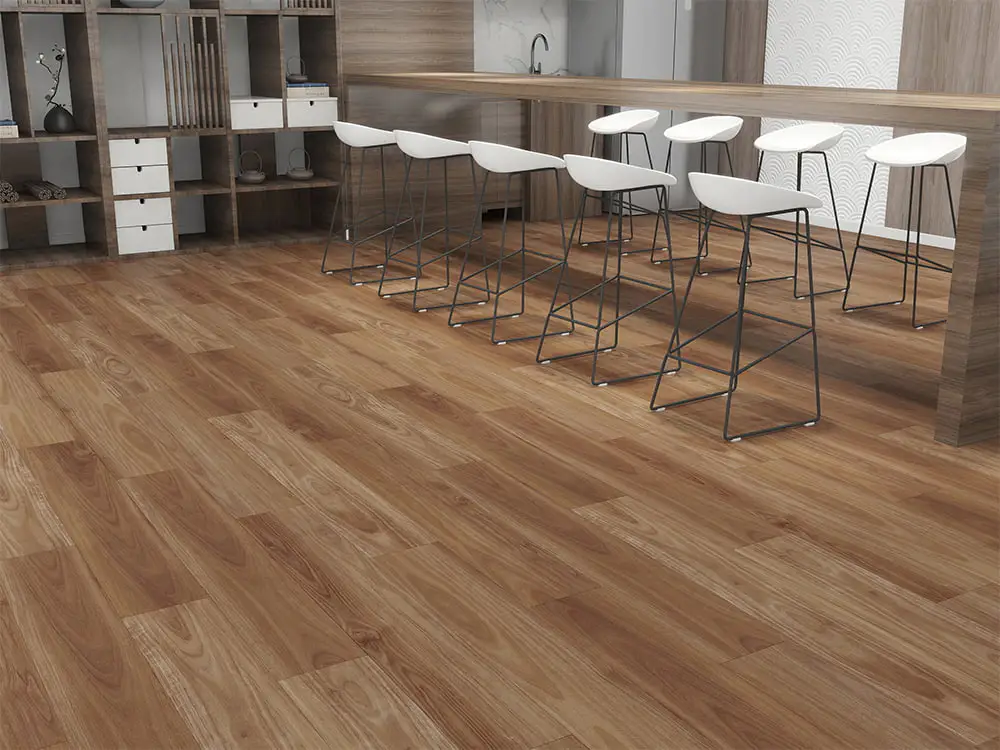
What Makes Commercial-Grade SPC Different From Standard Flooring
Not every stone polymer composite floor is built for the same environment. Standard residential-grade panels often skip the reinforced core layers that commercial spaces actually require.
A properly engineered commercial panel includes a denser mineral core, a tougher wear layer, and dimensional stability that resists shifting under heavy equipment. These are not cosmetic upgrades. They determine whether a floor survives years of forklift traffic or starts showing stress cracks within a single season.
Does High Density Really Translate Into Better Durability?
Density is often more important than many buyers initially expect. A tightly compressed core offers stronger resistance to indentation from furniture legs, rolling chairs, and pallet jacks than a hollow or loosely filled structure.
Pure SPC Flooring takes this a step further by using a solid mineral composition throughout, rather than blending in lighter fillers. The result is a panel that holds its shape under sustained pressure, which matters enormously in retail aisles or office corridors where the same path gets walked hundreds of times a day.
Moisture Resistance Changes Where This Material Can Be Installed
Water damage ends more commercial flooring installations early than almost anything else. Spills, mopping, humidity swings, and even minor plumbing leaks can warp organic-based materials over time.
The composite core in SPC panels does not absorb moisture the way wood-based products do. That single property opens up placement options that many alternatives simply cannot handle:
- Restrooms and break rooms with frequent water contact
- Entryways exposed to rain and foot-tracked moisture
- Basement-level offices with naturally higher humidity
- Kitchen prep areas in commercial food service settings
This resistance is also why PVC Flooring Bathroom and Kitchen applications have grown so common in mixed-use commercial buildings where wet zones sit right next to dry office space.
How Does SPC Compare Against WPC Flooring in Daily Use?
Buyers researching resilient flooring options inevitably run into the WPC and SPC Flooring comparison, and the differences matter depending on the space.
WPC Flooring uses a wood-plastic composite core, giving it a slightly softer underfoot feel and better sound dampening. Hybrid WPC Flooring blends in additional stabilizers to close some of the durability gap, but it still tends to compress more under sustained heavy loads than a mineral-based SPC core.
For spaces with rolling equipment, high pedestrian counts, or frequent furniture rearrangement, the firmer SPC structure generally holds up with fewer visible dents over time. For quieter office zones where comfort underfoot matters more than raw compression resistance, WPC remains a reasonable choice.
Where Does Regular PVC Fit Into the Decision?
Flooring PVC Flooring products still play a role, particularly in budget-conscious projects or temporary installations. PVC Flooring Types range from thin sheet vinyl to thicker luxury vinyl tile, and performance varies widely across that range.
Office PVC Flooring installations often work well in low-traffic administrative areas where foot patterns stay light and predictable. PVC Patio Flooring, meanwhile, addresses outdoor or semi-covered spaces where UV exposure and temperature swings come into play, something indoor-focused SPC panels are not typically designed to handle without added protective coatings.
The point is not that one material replaces the other entirely. It is that each material category has a zone where it performs reasonably, and matching the material to the actual traffic pattern avoids costly replacement cycles later.
Does Appearance Have to Suffer for the Sake of Durability?
A common misconception treats commercial-grade flooring as strictly utilitarian, lacking the visual warmth that hospitality or retail spaces often want. That assumption no longer holds up.
Wood Veneer SPC Flooring applies a genuine wood layer over the stable composite core, giving designers the visual texture of hardwood while keeping the moisture resistance and compression strength that hardwood alone cannot offer. Hotels, restaurants, and boutique retail spaces increasingly lean on this hybrid approach because it satisfies both the aesthetic brief and the maintenance department's durability requirements.
A Quick Comparison Across Common Commercial Flooring Options
| Material Type | Moisture Handling | Compression Resistance | Typical Placement |
|---|---|---|---|
| SPC Flooring Commercial | Handles wet zones well | Holds up under heavy loads | Lobbies, corridors, retail |
| WPC Flooring | Moderate resistance | Softer underfoot, some give | Offices, quiet common areas |
| Hybrid WPC Flooring | Improved over standard WPC | Better than base WPC | Mixed-use interior spaces |
| PVC Flooring Types | Varies by thickness | Lower under sustained pressure | Light-traffic office zones |
| Wood Veneer SPC Flooring | Strong moisture handling | Strong, with wood aesthetic | Hospitality, boutique retail |
This side-by-side view helps explain why procurement teams rarely settle on one single material for an entire building. Different zones carry different traffic loads, and matching the flooring category to each zone tends to reduce long-term maintenance calls.
Why Maintenance Costs Often Decide the Final Choice
Upfront material pricing rarely tells the full story. What actually drives long-term budgets is how often a floor needs refinishing, patching, or full replacement.
Commercial SPC panels typically need less intensive upkeep than softer alternatives because the wear layer resists scratching from foot traffic and cleaning equipment. Facilities that switch from carpet or laminate to SPC often report fewer service calls related to surface damage, which frees up maintenance budgets for other building needs.
What Should Buyers Ask Before Placing a Bulk Order?
Sourcing decisions get complicated once volume enters the picture, and buyers exploring Wholesale SPC Flooring should look past the sample sheet before committing to a full order.
A few practical questions tend to separate a solid supplier relationship from a problematic one:
- Does the factory maintain consistent core density across production batches
- Are wear layer thicknesses documented and verifiable
- Can the supplier provide samples that match actual production runs rather than showroom-only stock
- What production timelines apply for reorders if a project is phased across multiple building sections
A reliable PVC Flooring Factory or WPC Flooring Manufacturer will answer these questions directly rather than deflecting toward marketing language. Working with an established WPC Flooring Supplier that also understands SPC production tends to simplify sourcing for buyers managing mixed-material projects.
Does Sourcing From China Change the Sourcing Equation?
Manufacturing capacity for resilient flooring has concentrated heavily around China WPC Flooring production over recent years, largely because raw material access and factory scale support high-volume orders without the extended wait times smaller regional producers face.
That scale does not automatically guarantee quality, though. Buyers still need to verify certifications, request third-party testing documentation where available, and confirm that a factory's stated specifications match what actually ships. Volume alone is not a substitute for consistency.
Bringing the Decision Together for Commercial Projects
Choosing flooring for a high-traffic commercial environment rarely comes down to a single feature. It is the combination of moisture resistance, compression strength, maintenance cost, and visual flexibility that determines whether a floor still looks presentable after years of daily use. SPC Flooring Commercial is well suited to spaces with heavy, continuous foot and equipment traffic, while WPC and PVC alternatives remain suitable for lighter-use areas or projects with tighter budget requirements.
Buyers weighing these tradeoffs across multiple building zones or planning a larger procurement cycle often benefit from working directly with a manufacturer that understands both the technical and logistical sides of bulk flooring orders. Zhejiang Ousikai New Material Co.,Ltd works with commercial buyers navigating exactly these kinds of multi-material, multi-zone flooring decisions, and welcomes inquiries from project teams looking to align material choice with actual traffic demands before finalizing an order.

