
 English
 中文简体
中文简体 Español
Why Choose WPC Flooring with Better Moisture Resistance?
Flooring failures in humid environments share a recognizable pattern — edges lift, surfaces bubble, grout lines crack, and what looked like a sound installation begins to deteriorate in ways that are expensive to fix and difficult to reverse. For procurement teams, property developers, and building material distributors evaluating flooring options for bathrooms, kitchens, basements, or commercial spaces with moisture exposure, the question of moisture resistance is not a secondary specification. It sits at the center of the product decision. China WPC Flooring has become a significant part of the answer to this problem across a range of residential and commercial applications, but understanding why moisture resistance matters — and how to evaluate it — requires working through the technical logic rather than accepting a label at face value.
What WPC Flooring Is and How It Is Constructed
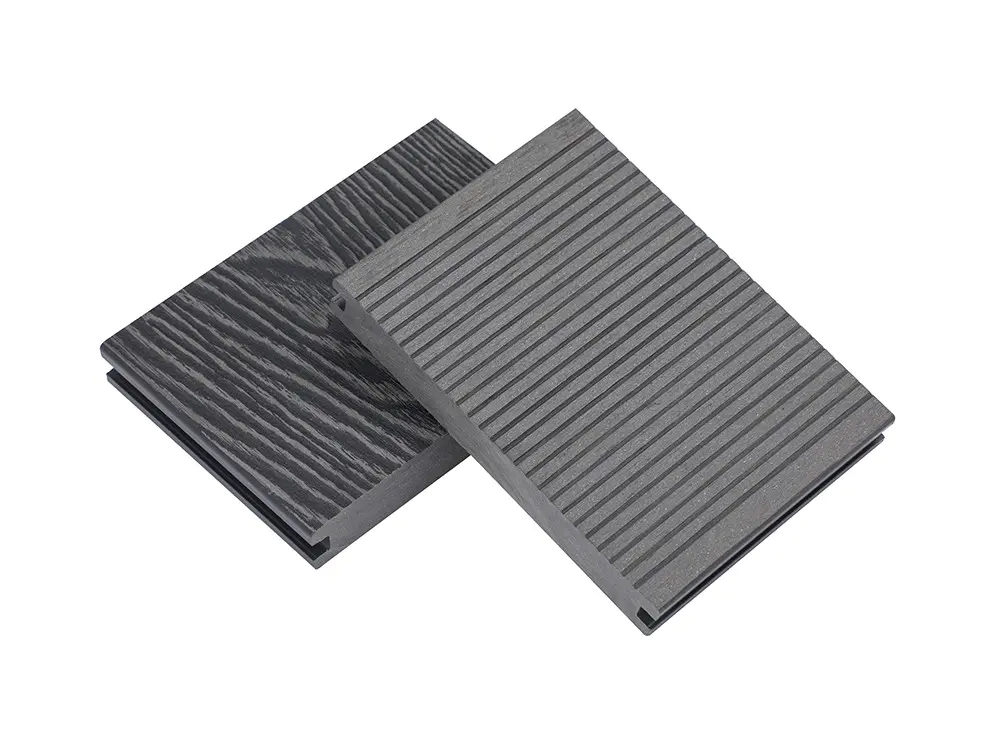
The Core Structure Determines the Moisture Behavior
WPC stands for wood-plastic composite. The name describes the core material: a blend of wood-derived fiber or flour and thermoplastic polymers, processed under heat and pressure into a rigid or semi-rigid plank form. The composite core is what differentiates WPC from laminate flooring, where the core is a wood-fiber board that reacts to moisture in a fundamentally different way.
A standard WPC flooring plank consists of several distinct layers:
- Wear layer: A transparent protective film on the surface that resists scratching, staining, and surface abrasion. Thickness affects how long the surface remains intact under foot traffic.
- Decorative layer: A printed layer beneath the wear layer that provides the visual appearance — wood grain, stone patterns, or other aesthetics.
- WPC core: The structural layer. The composite formulation and density determine how the plank responds to moisture, temperature change, and mechanical load.
- Backing or underlayment: Often attached at the factory, the backing provides cushioning, sound damping, and an additional moisture barrier between the plank and the subfloor.
The waterproof characteristics of WPC flooring come primarily from the core composition. Because the core material is a polymer-wood blend rather than a pure wood-fiber board, it does not absorb water the way wood-based cores do. The behavior of the plank when exposed to standing water or prolonged humidity is therefore fundamentally different from laminate or solid hardwood.
How Moisture Damages Flooring Materials That Are Not Designed for It
The Failure Modes Are Predictable and Expensive
Understanding why moisture resistance matters starts with understanding what happens to flooring materials that lack it. The failure modes are well-established and consistent across different floor types.
Solid hardwood flooring: Wood is a hygroscopic material — it absorbs moisture from the surrounding environment and releases it as humidity levels change. This dimensional movement causes expansion during humid periods and contraction during dry periods. In a bathroom or kitchen where humidity levels cycle regularly, solid hardwood responds with cupping (edges higher than the center), crowning (center higher than the edges), and eventually cracking. The movement is not a product defect; it is a material characteristic. Solid hardwood is simply not the right product for moisture-exposed environments.
Laminate flooring: Laminate cores are typically made from high-density fiberboard — compressed wood fiber with resin. Fiberboard responds to water quickly. Water infiltrating through the seams or edges of a laminate installation reaches the core and causes swelling that is often irreversible. The planks lock against each other as they swell, creating visible raised ridges along the seams. Once the core has absorbed water and swollen, the plank does not return to its original dimensions even after drying. Replacement is usually the only remedy.
Mold and mildew development: Beyond the structural damage to the flooring itself, moisture trapped beneath non-waterproof flooring creates conditions for mold and mildew growth. In residential settings, this creates air quality concerns. In commercial settings — particularly hospitality, healthcare, or food service environments — it creates compliance and liability issues. A flooring failure that results in mold remediation costs significantly more than the flooring replacement alone.
What Makes WPC Flooring Moisture Resistant
The Technical Mechanism Behind the Performance Claim
WPC flooring's moisture resistance is a function of its core chemistry rather than a coating applied to the surface. The thermoplastic matrix in the composite core does not absorb water. This means that even when water reaches the core through a gap in the wear layer or through an unsealed seam at the plank edge, the core does not swell or deform the way a wood-fiber board would.
The closed-cell structure of a well-manufactured WPC core is a related advantage. Unlike the porous, fibrous structure of wood-based boards where water can wick along the fiber direction even when the surface appears dry, the composite structure of a WPC core does not provide capillary pathways for water movement. Water that contacts the core surface stays at the surface rather than being drawn inward.
Dimensional stability in practice: The practical consequence of moisture resistance is dimensional stability. A WPC plank installed in a bathroom that experiences daily steam from a shower, regular floor mopping, and seasonal humidity variation will maintain its dimensions and its locking joint integrity over time. The same installation using a standard laminate product would typically show edge swelling within the year of use.
The role of the backing layer: WPC flooring products include an attached underlayment that provides an additional moisture barrier at the interface between the plank and the subfloor. This is particularly important in basement installations where moisture vapor transmission from a concrete subfloor is a constant, low-level source of moisture exposure even in the absence of visible water.
Where Moisture Resistance Is Critical
The Application Drives the Specification
Not every flooring installation carries the same moisture exposure. A WPC product suitable for a dry office environment may be specified correctly without placing particular emphasis on moisture resistance. But for any of the following environments, moisture resistance moves from a preference to a requirement:
Bathrooms: Daily steam, splash from showers and bathtubs, condensation on cold surfaces, and the possibility of minor water spillage from handwashing create a consistently humid environment. The floor receives direct water contact regularly. Any flooring product without a genuinely waterproof core will show damage within a typical renovation cycle.
Kitchens: Food preparation, dishwasher condensation, under-sink plumbing areas, and frequent mopping create moderate but consistent moisture exposure. The risk is often underestimated because the water contact is less dramatic than in a bathroom, but the cumulative effect on non-waterproof flooring is comparable.
Basements: Below-grade spaces are often subject to moisture vapor transmission from the concrete slab, seasonal groundwater variation, and temperature differentials that create condensation. Even a basement that has never had visible flooding may maintain relative humidity levels that will eventually damage non-waterproof flooring installed at grade or below grade.
Laundry rooms: Condensation from appliance operation, possible hose leaks, and humidity from hot-water cycles create conditions similar to bathrooms in terms of moisture exposure.
Commercial and hospitality spaces: Lobbies, hotel bathrooms, restaurant floors, and healthcare corridors all involve cleaning protocols that put large volumes of water on the floor surface regularly. Flooring in these applications needs to handle not just incidental moisture but systematic wet mopping, chemical cleaning solutions, and spills without degrading.
Outdoor-adjacent areas: Entry halls, covered patios, and spaces adjacent to exterior doors receive tracked-in moisture and are subject to humidity variation with changing weather. The resilience of WPC to these conditions makes it a practical choice for transitional spaces between indoor and outdoor environments.
WPC Flooring Compared to Alternative Materials in Moisture-Exposed Environments
| Feature | WPC Flooring | Laminate Flooring | Solid Hardwood | SPC Flooring | Ceramic Tile |
|---|---|---|---|---|---|
| Moisture resistance | High | Low to moderate | Low | Very high | Very high |
| Comfort underfoot | Good cushioning | Moderate | Good | Firm | Hard, cold |
| Acoustic performance | Good | Moderate | Moderate | Firm, louder | Hard, echoey |
| Installation flexibility | Floating click lock | Floating click lock | Nail or glue down | Floating click lock | Adhesive set |
| Repair of damaged planks | Plank replacement | Plank replacement | Board replacement | Plank replacement | Grout and tile repair |
| Subfloor tolerance | Moderate imperfections | Lower tolerance | Low tolerance | Low tolerance | High requirement |
| Underfloor heating compatibility | Compatible (check specs) | Limited | Not recommended | Compatible | Compatible |
| Cost relative to comparable options | Mid-range | Lower | Higher | Similar to WPC | Varies widely |
The comparison with SPC (stone plastic composite) flooring is worth a specific note. SPC uses a higher-density stone-polymer core that is stiffer than WPC and offers similar waterproof characteristics. SPC tends to be firmer underfoot and transmits sound more readily. WPC's wood-fiber composite core provides more cushioning and better sound damping, which makes it a more comfortable choice for spaces where people stand or walk for extended periods. The moisture resistance of a well-manufactured WPC product is sufficient for all the residential and commercial applications described above; SPC's additional rigidity becomes more relevant in very high-traffic commercial or industrial environments.
How Moisture Resistance Affects the Full Service Life of a Flooring Installation
The Long-Term Calculation Changes the Cost Picture
A flooring product that maintains its structural integrity, surface appearance, and joint integrity over time costs less per year of service life than a cheaper product that requires early replacement. For project developers and procurement teams calculating lifecycle costs rather than just upfront material costs, moisture resistance is a performance dimension with direct financial consequences.
Structural integrity over time: A WPC installation in a bathroom that remains dimensionally stable year after year does not require re-installation, underlayment replacement, or subfloor remediation. The total cost of a properly specified WPC floor over a ten-year period may be lower than the cost of a cheaper laminate product that requires complete replacement after moisture damage in the few years.
Surface appearance retention: Moisture-related damage typically begins at the seams and edges of planks, working inward. As seam integrity is compromised, the decorative layer may separate from the core in affected areas, creating visible damage that spreads. A moisture-resistant product maintains the integrity of its seams and therefore maintains the appearance of the floor surface for a longer period.
Maintenance cost reduction: A floor that can be wet-mopped without concern for moisture infiltration is easier to maintain. Avoiding the precautions required for moisture-sensitive flooring — limiting water contact time, using minimal moisture during cleaning, drying immediately after mopping — simplifies building maintenance protocols.
How to Evaluate Moisture Resistance When Selecting WPC Flooring
What to Look for Beyond the Marketing Claims
Not all moisture resistance claims are equivalent. Evaluating the actual performance of a WPC flooring product requires going beyond the label and into the product specifications.
Key evaluation points:
- Core composition and density: A denser composite core with a higher polymer-to-wood ratio generally provides better moisture resistance. Ask the WPC Flooring Supplier for core composition information and compare specifications across products.
- Waterproof certification and testing: Products that have been tested for moisture resistance under defined conditions provide a more reliable basis for specification than products where the claim is not backed by documentation. Ask for test reports covering moisture absorption, dimensional change under humidity exposure, and any applicable waterproof standards.
- Wear layer thickness and integrity: The wear layer is the surface barrier. A thicker, higher-quality wear layer resists surface scratching that can eventually expose the decorative layer and allow surface moisture penetration.
- Joint design: The locking joint design affects how water-resistant the assembled floor is. Tight, well-engineered click joints minimize gaps where water can infiltrate. Some WPC flooring products include a waterproof sealant in the joint channel for additional protection.
- Backing material: The attached underlayment or backing should function as a moisture barrier rather than a moisture pathway. Ask the WPC Flooring Manufacturer about the backing specification and its moisture permeability.
- Warranty coverage for moisture-related damage: A manufacturer willing to warranty the product against moisture-related failure for a defined period is demonstrating confidence in the product's actual performance. Read the warranty terms carefully for exclusions related to installation conditions or subfloor moisture levels.
Sourcing WPC Flooring: What to Evaluate in a Manufacturer or Supplier
The Product Is Only as Reliable as the Supply Chain Behind It
The quality of WPC flooring varies considerably between manufacturers, and evaluating the supplier matters as much as evaluating the product specification.
Production consistency: A WPC Flooring Manufacturer with consistent quality control across production batches delivers products that meet specification reliably. Batch-to-batch variation in core density, wear layer thickness, or coating quality creates unpredictable performance in field installations. Ask about quality control procedures and whether products are tested per batch or per production run.
Core material sourcing: The quality of the raw materials — polymer type, wood fiber grade, and additive packages for UV stabilization and fire resistance — affects the finished product's performance. Manufacturers who can trace and document their material sourcing provide more assurance than those who cannot.
Certification and compliance: Export-oriented WPC Flooring Manufacturers typically hold certifications relevant to target markets — formaldehyde emission standards, fire classification ratings, slip resistance certifications, and environmental product declarations. Verify which certifications apply to the specific product being sourced, not just the manufacturer's general capability.
OEM and customization capability: Distributors and developers sourcing large volumes may need customized products — specific plank dimensions, proprietary surface designs, custom packaging, or private-label branding. A WPC Flooring Manufacturer with OEM capability can accommodate these requirements without requiring buyers to accept standard catalog specifications.
Export logistics experience: For buyers sourcing from China WPC Flooring Manufacturers, the logistics dimension includes container loading specifications, moisture protection during ocean freight, and familiarity with the documentation requirements of the destination market. Manufacturers with established export channels simplify the procurement process compared to those without international logistics experience.
Questions Worth Asking Before Finalizing a WPC Flooring Order
A structured set of questions directed at any prospective WPC Flooring Supplier clarifies the important performance and sourcing variables before commitment:
- What is the core composition by weight, and how does it affect moisture absorption compared to standard laminate core?
- What testing has been done for moisture resistance, and can you provide the test reports?
- What is the wear layer specification, and how does it affect the moisture barrier function of the surface?
- What warranty coverage applies specifically to moisture-related damage, and what installation conditions affect the warranty?
- What certifications does the product carry for the target market?
- What is the production consistency record — how does quality control work across batches?
- Can samples be provided for independent testing before volume order placement?
Making the Right WPC Flooring Decision for Moisture-Prone Applications
Moisture resistance in WPC flooring is not a single specification — it is the combined result of core composition, joint design, backing material, wear layer quality, and manufacturing consistency. Getting each of these variables right produces a floor that performs reliably in humid environments for the full expected service life. Getting any of them wrong produces a product that looks acceptable on delivery but begins to show failure in the conditions it was purchased specifically to handle. For procurement teams and project managers specifying flooring for bathrooms, kitchens, basements, commercial wet areas, or any environment where moisture exposure is part of normal use, understanding these variables before sourcing is what separates a successful installation from a costly one.
Zhejiang Ousikai New Material Co., Ltd. manufactures WPC flooring products designed for moisture-resistant residential and commercial applications. Their product range covers core specifications, wear layer options, and backing configurations relevant to different levels of humidity exposure and project requirements. As an experienced WPC Flooring Manufacturer with export capability, they provide documentation covering waterproof performance, emission standards, and applicable certifications for international markets. For distributors, developers, and procurement teams evaluating WPC flooring sourcing, reaching out to their team to discuss product specifications, sample requests, and volume requirements is a practical starting point.

