
 English
 中文简体
中文简体 Español
Pure SPC Flooring: Durability and Stability Explained
A floor that swells at the edges after a humid summer, or one that dents under the weight of a rolling chair within a year of installation — anyone who has dealt with either problem already understands why pure SPC flooring keeps coming up in renovation conversations. It's not a buzzword contractors throw around for no reason. It's usually the answer to a specific, frustrating pattern: flooring that looked fine on day one and started failing not long after. Choosing a flooring material rarely feels straightforward once you start comparing options side by side. Terms overlap, marketing language blurs the distinctions, and somewhere in the middle of researching WPC, PVC, and everything in between, the actual question gets lost: what's going to hold up under real conditions, day after day, without warping or cracking?
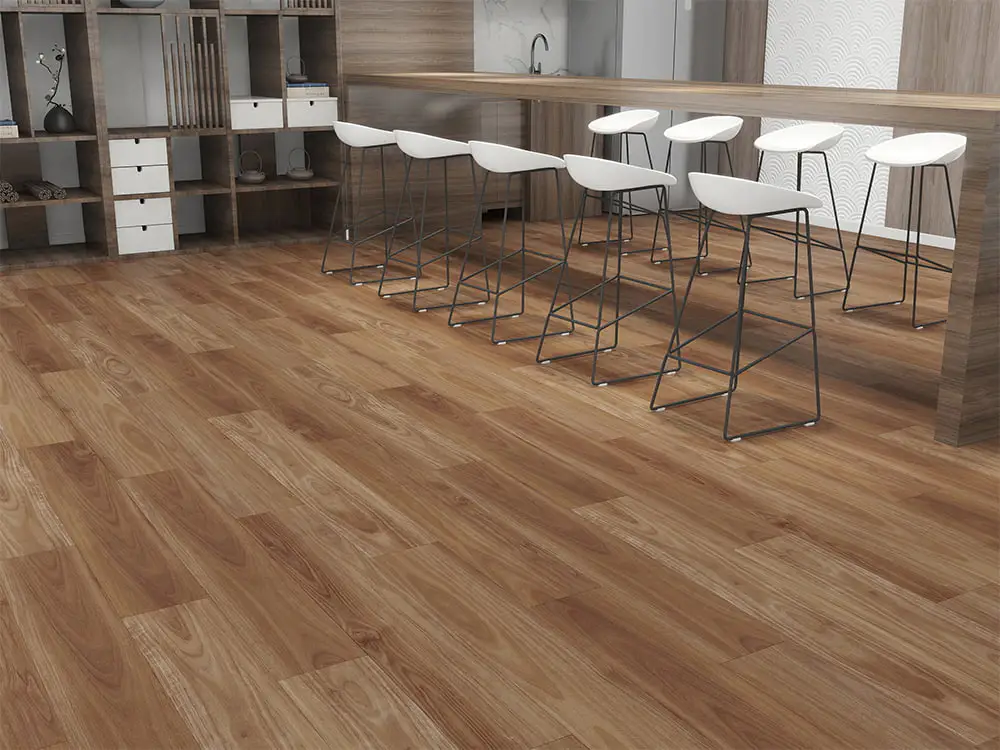
What Is Pure SPC Flooring, Structurally Speaking?
Stone plastic composite flooring gets its name from what's actually inside it — a dense core built from mineral powder combined with polymer material and stabilizing agents. That combination isn't accidental. The stone-based content is what gives the material its rigidity, while the polymer binds everything into a cohesive, workable sheet.
Unlike flooring that relies on wood fiber for its core structure, pure SPC flooring skips organic content al entirely. That distinction turns out to matter quite a bit once you start looking at how different flooring types behave under moisture, weight, and temperature swings over time.
Why Does Removing Wood Content Change the Performance Profile?
Wood, even when processed and composited into something like WPC flooring, retains a tendency to absorb moisture and respond to humidity by expanding or contracting slightly. That's just what wood does, regardless of how it's treated or bonded.
A core built from stone powder doesn't carry that same behavior. Without organic fiber content to absorb ambient moisture, the material stays dimensionally consistent across a much wider range of humidity conditions. That's really the core mechanical reason behind the durability conversation — it's not a marketing claim so much as a direct consequence of what the material is made from.
Density and Compression Resistance
A denser core also handles point-load pressure differently than a softer, fiber-based one. Furniture legs, rolling office chairs, dropped objects — all of these put concentrated pressure on a small area of flooring, and a denser material distributes that stress more evenly rather than denting or compressing permanently at the point of contact.
SPC vs WPC: What Actually Separates Them?
People often lump WPC and SPC flooring together since both fall under the broader composite flooring category, but the core materials diverge meaningfully.
- WPC flooring uses a wood-plastic composite core, blending wood fiber with polymer binding material
- Pure SPC flooring replaces that wood fiber entirely with mineral-based stone powder
- Hybrid WPC flooring sits somewhere between the two, sometimes blending in additional stabilizing layers to offset wood's natural moisture sensitivity
None of these are universally wrong choices. WPC flooring tends to feel slightly softer underfoot, which some people prefer in bedrooms or areas without heavy foot traffic. But when moisture exposure or structural stability is the priority, particularly in spaces with variable humidity, pure SPC flooring generally holds its shape more reliably over an extended period.
How Does This Compare to Standard PVC Flooring?
Flooring PVC plastic sheet products, in their simpler forms, lack the dense mineral core altogether. They're typically thinner, more flexible, and while that flexibility makes installation simple, it also means less resistance to denting and less structural rigidity underfoot.
PVC flooring types vary quite a bit depending on their construction, and some are perfectly suited to lighter residential use where heavy furniture or constant foot traffic isn't really a concern. But comparing a basic PVC sheet directly against pure SPC flooring, the density difference becomes obvious the moment you press a finger into each material.
Where Does Pure SPC Flooring Perform Best?
Not every space demands the same level of durability, so it's worth walking through where the material's particular strengths actually matter .
Commercial Spaces
SPC flooring commercial applications tend to involve constant foot traffic, rolling equipment, and the occasional heavy object being moved across the surface. The rigidity and compression resistance built into pure SPC flooring make it a practical fit for retail spaces, office environments, and other high-traffic commercial settings where a softer flooring option would show wear signs within a relatively short window.
Moisture-Prone Rooms
PVC flooring bathroom and kitchen applications benefit enormously from a moisture-stable core, since these are exactly the rooms where humidity, splashing, and occasional standing water put ordinary flooring materials under repeated stress. The same logic extends to office PVC flooring in buildings with less controlled climate conditions.
Outdoor-Adjacent Applications
PVC patio flooring and similar semi-outdoor uses face temperature swings and moisture exposure that indoor-only materials were never designed to handle. A stone-based core tends to hold dimensional stability better across these fluctuations than wood-composite alternatives.
Comparing Flooring Types at a Glance
Flooring TypeCore MaterialMoisture StabilityTypical Best FitPure SPC flooringStone powder and polymerConsistently stable across humidity swingsCommercial spaces, bathrooms, kitchensWPC flooringWood fiber and polymerModerate, more sensitive to humidityResidential rooms with lighter trafficHybrid WPC flooringBlended wood and stabilizing layersImproved over standard WPC, still below SPCTransitional residential useStandard PVC flooringFlexible plastic sheetVariable depending on thicknessLight residential or temporary installations
Working through a comparison like this tends to clarify decisions faster than reading marketing copy for each individual product line, since the core material itself tells you of what you need to know about long-term performance.
Is Installation Any Different for SPC Flooring?
One detail worth mentioning: pure SPC flooring often comes in click-lock or interlocking formats that make DIY SPC flooring installation genuinely manageable without specialized tools. The rigidity of the core actually helps here, since planks lock together cleanly without the flex that softer materials sometimes introduce during fitting.
That said, subfloor preparation still matters regardless of how forgiving the installation format is. A subfloor with significant unevenness will telegraph through any flooring material eventually, dense core or not, so leveling work beforehand remains a step worth taking seriously.
What About Appearance? Does Durability Come at the Cost of Looks?
Not particularly. Wood veneer SPC flooring options apply a printed or textured surface layer over the stone-based core, giving the appearance of natural wood grain without sacrificing the underlying structural benefits. This addresses a common hesitation people have — the assumption that a more durable, mineral-based material has to look industrial or plain.
In practice, the visual layer sits independently from the structural core, meaning appearance and performance aren't really in tension with each other the way they might have been with older composite flooring generations.
Sourcing Considerations for Bulk or Commercial Projects
For contractors, developers, or wholesale buyers evaluating flooring at scale, sourcing decisions tend to hinge on a few practical factors beyond the material science itself:
- Consistency across batches, particularly for large commercial projects where color and texture matching matters
- Turnaround timelines from a PVC flooring factory or WPC flooring manufacturer capable of meeting project deadlines
- Availability of wholesale SPC flooring quantities without compromising on core density specifications
- Working with a WPC flooring supplier or China WPC flooring producer that can provide consistent documentation on material composition
These considerations matter just as much as the underlying performance characteristics, particularly for projects where flooring for sale needs to arrive on schedule and match specifications across an entire building or retail chain.
Choosing between pure SPC flooring, WPC flooring, and standard PVC options ultimately comes down to matching material properties to the actual demands a space will place on it, rather than defaulting to whichever option seems simplest or familiar. Moisture exposure, foot traffic volume, and long-term dimensional stability all point toward different answers depending on the room or building in question, and understanding the core material differences makes that decision considerably easier than comparing product photos alone. Zhejiang Ousikai New Material Co., Ltd. works with contractors, developers, and flooring buyers evaluating SPC and WPC options for residential and commercial projects, and welcomes inquiries about material specifications, wholesale availability, and project-specific sourcing needs.

