
 English
 中文简体
 Español
How Stair Nosing Improves Safety on Everyday Staircases
Why Stair Safety Matters in Daily Use
Stairs appear in homes, offices, shops and public buildings, and every flight asks the body to judge height, depth and edge position in a short sequence of steps. When lighting is uneven, when hands are full or when surfaces are slightly worn, that judgement becomes harder. Smooth front edges, rounded corners that are difficult to see and treads that offer little friction under a damp sole all increase the chance of a slip or a missed step. Edge protection is therefore not only a decorative trim; it is part of how the walking surface is read and used. Residential flights used by children and older relatives, and commercial flights used by continuous foot traffic, both benefit when the front of each step is clearly defined and finished with a surface intended for foot contact.
Exposed stair edges also take more wear than the middle of the tread. Shoes scuff the nosing line first, vacuum heads catch it and cleaning moisture sits along the front corner. Over time the edge can round off, lift or become slippery relative to the rest of the step. Addressing that line with a purpose-made nosing profile helps keep the geometry of the step readable and gives the foot a consistent place to land.
How Stair Nosing Improves Safety in Practice
Creating a Defined Edge Along Each Step
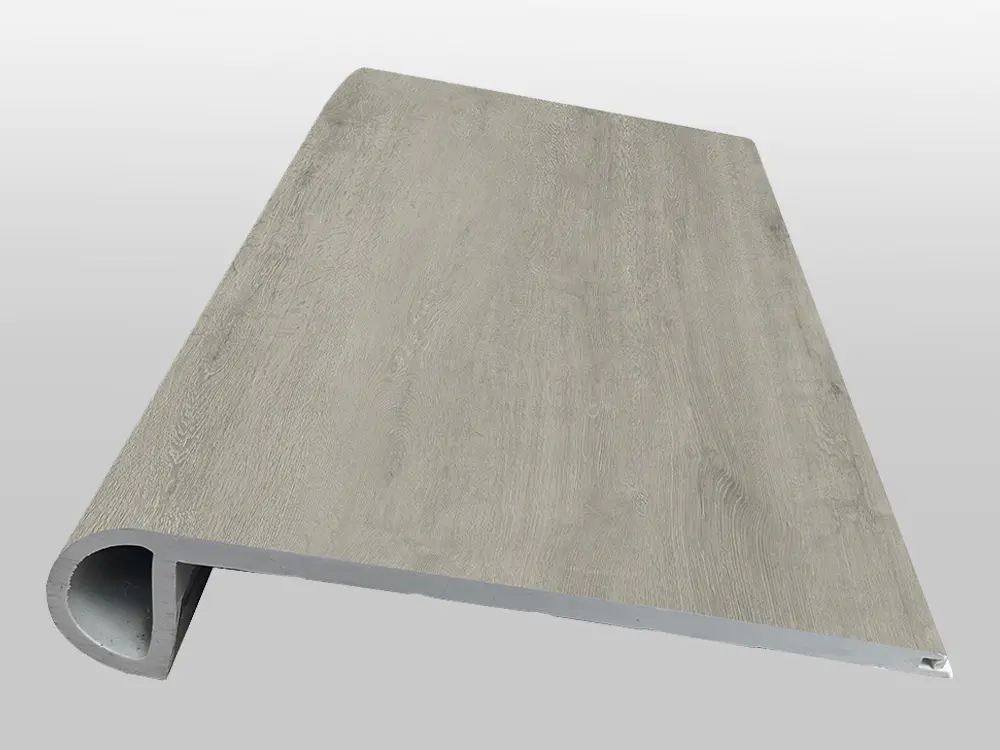
Stair nosing is a profile fitted along the front of the tread so that the front edge is finished as a distinct strip rather than a bare cut of flooring or timber. That strip marks where the step ends. Under ordinary indoor light the change in surface and the slight change in plane help the eye pick up the boundary before the foot commits to the next level.
Grip Under the Foot
Many nosing designs include a tread face with texture, grooves or a material chosen for friction in dry indoor conditions. When the sole presses on that band, the contact is less glassy than on a polished plank edge. Grip does not remove the need for suitable footwear or dry cleaning practices, but it adds a local aid exactly where weight transfers during ascent and descent.
Recognising Step Boundaries
Clear edges reduce the "merged step" effect that appears when identical flooring runs without a break over the nose. A finished nosing interrupts that visual field. In corridors that turn onto a stair, or in open-plan spaces where flooring colour is continuous, that interruption is especially useful for people who are unfamiliar with the flight.
A More Stable Walking Surface When Installed Well
Nosing that is fixed firmly, flush with the intended line and free of raised lips gives a predictable platform. Loose or proud sections do the opposite: they catch toes and create rocking contact. Safety therefore depends as much on installation quality as on the profile shape itself. A Safe Tread Stair Nosing product is only as effective as the way it sits on the step after fixing.
Safety-Related Advantages of Stair Nose Profiles
Anti-Slip Oriented Tread Design
The walking face is arranged to support sole grip during ordinary indoor use. Texture and material choice are selected for repeated foot traffic rather than for appearance alone, while still forming a clean line at the front of the step.
Defined Stair Edges
A continuous nosing gives each tread a clear front boundary. That boundary helps with depth perception on the way down and with toe placement on the way up, particularly on flights where step colour is uniform.
Coverage of the Exposed Edge
The profile covers the vulnerable front corner of the substrate. Direct scuffing against a raw edge is reduced, and the structural corner of the step is less exposed to impact from shoes and cleaning equipment.
Compatibility with Vinyl Flooring Applications
Where stairs are finished in vinyl, a matching or compatible nosing profile can complete the tread edge so that the resilient surface and the nose work as one system. Fit depends on profile geometry, thickness of the flooring and the installer following the correct method. Vinyl Flooring Stair Tread Nosing is specified when the stair surface is vinyl and the edge detail must align with that covering.
A Practical Finished Appearance
Functional edge protection and a neat front line can coexist. A well-chosen profile looks intentional in residential hallways and commercial interiors while still serving grip and definition.
How Stair Nosing Supports Safer Use in Different Spaces
Residential Staircases
Family homes see mixed users, occasional hurried trips and varying light from landings and windows. Defined noses help everyday traffic and guests who do not know the rise and going of the flight. Vinyl or other resilient finishes on domestic stairs often need a coordinated edge so that the covering does not end in a thin, unprotected lip.
Commercial Interiors with Regular Traffic
Shops, offices and service buildings put continuous wear on the front of each tread. Replaceable or durable nosing concentrates wear on a component designed for that duty and keeps step edges legible for staff and visitors.
Public Indoor Areas
Corridors that cause to stairs in shared buildings benefit from edges that remain visible under general lighting. Clear nosing supports safer movement where people carry bags or talk while walking and pay less attention to each step.
Vinyl-Floored Stairs
Vinyl installations on stairs require careful treatment of the nose so that the sheet or plank does not peel at the edge. A compatible nosing profile protects that termination and provides the grip band in the same place.
How Proper Installation Affects Stair Safety
Matching Profile to Stair Dimensions
Width of the tread band, depth of the return and thickness of the profile must suit the step and the flooring build-up. A mismatch leaves overhangs or gaps that catch feet or collect dirt.
Preparing a Clean, Stable Surface
Adhesives and mechanical fixings only perform on sound, clean substrates. Dust, loose coatings or uneven fronts prevent full contact and can allow the nosing to lift under traffic.
Following the Recommended Fixing Method
Each product is designed for specific fixing approaches—adhesive, mechanical fasteners or a combination. Substituting an unapproved method can leave the profile insecure even if it looks straight on day one.
Checking for Secure, Flush Seating
After installation, the nosing should sit without rocking, without raised front edges and without hollow spots. Any movement under hand pressure is corrected before the stair is returned to full use. Periodic checks in busy buildings catch fixings that loosen over time.
Stair Nosing Functions and Selection Points
| Aspect | Contribution to safer use | What to confirm |
|---|---|---|
| Defined front edge | Makes step boundary easier to see | Contrast and continuous line along the tread |
| Tread surface texture | Supports sole grip at the nose | Suitable for indoor traffic and cleaning method |
| Edge coverage | Protects substrate corner from wear | Full seating on the front of the step |
| Flooring compatibility | Works with vinyl or other specified finishes | Profile matches thickness and system |
| Secure installation | Prevents trip edges from loose profiles | Correct fixings; no lift or rock |
| Appearance | Finished look in home or commercial interiors | Colour and shape suit the stair design |
Limits of What Nosing Can Do
Stair nosing improves grip at the edge, visibility of the step and protection of the corner. It does not replace adequate lighting, suitable handrails, correct rise and going design or dry, well-maintained treads. Water, polish residue or inappropriate footwear can still reduce friction. Nosing is one component in a wider approach to stair safety, not a standalone guarantee.
Choosing Nosing as Part of a Stair Finish System
Selection starts with the stair substrate and the flooring type, then moves to profile shape, tread texture and fixing method. Samples help confirm colour and edge detail against the surrounding floor. For vinyl stairs, coordination between the resilient covering and the nosing profile avoids thin unsupported edges. For timber or other cores, the nosing must still be fixed to a stable front edge so that traffic does not peel it away.
Edge Definition, Grip and Protection on the Walking Line
Stair nosing supports safer movement by marking each step's front edge, offering a tread surface intended for foot grip and covering the corner that wears first. Residential, commercial and public indoor flights all benefit when profiles are correctly sized and firmly installed, including on vinyl-finished stairs where edge termination is critical. Zhejiang Ousikai New Material Co.,Ltd produces flooring-related profiles including stair nosing for indoor applications. Review of profile shape, tread surface, substrate compatibility and installation method against the stair design supports selection of nosing that improves edge clarity and everyday footing on completed flights.

