
 English
 中文简体
 Español
12mil vs 20mil Wear Layer: How Wear Layer Thickness Affects Scratch Resistance
An SPC flooring spec sheet lists 12mil and 20mil wear layers side by side, and the price difference commonly lands between $0.30 and $0.50 per square foot. For a 1,500-square-foot commercial project, that is $450 to $750 of budget margin tied to a number many buyers never fully interrogate. The real question is how much of that extra cost actually returns as scratch resistance and extended service life.
For a residential project, 12mil may be enough. For a boutique retail space, 20mil is the sensible minimum. The distinction is not cosmetic - it is a purchase decision that changes the floor's lifespan and your cost per year of service.
What Does Wear Layer Thickness Actually Measure?
Wear layer thickness measures the depth of abrasive material protecting the printed design film, and it is the primary determinant of how long the floor keeps its visual appearance.
Every scuff, micro-abrasion, and deep scratch removes a little of this transparent material. A 12mil layer (0.3mm) and a 20mil layer (0.5mm) are both sacrificial surfaces, with the 20mil layer simply offering more material before the printed film is exposed. The standard way manufacturers validate this is the Taber abrasion test (ASTM D4060), where a rotating wheel with abrasive paper grinds the surface and technicians count cycles until the design print shows through.
These are representative industry ranges, not certified values for every brand. They show the basic relationship: a 67% increase in wear layer thickness can produce nearly a 100% increase in abrasion resistance.
12mil vs 20mil: What the Numbers Mean in Practice
Choosing between 12mil and 20mil is not about repelling all scratches - it is about buying enough sacrificial material to avoid premature print-through.
| Specification | 12mil Wear Layer | 20mil Wear Layer |
| Thickness | 0.3mm | 0.5mm |
| Taber abrasion (approx.) | 5,000-7,000 cycles | 10,000-15,000 cycles |
| Intended use | Residential | Light commercial / heavy residential |
| Typical service life | 10-15 years | 15-20 years |
| Cost premium vs 12mil | Baseline | +$0.30-$0.50 per sq ft |
The thickness increase translates into roughly double the abrasion cycles. The keeper behind that math is simple: a deeper wear layer keeps the printed design hidden longer under continuous foot traffic. The cost per year of service narrows as the service window widens.
How Wear Layer Thickness Affects Scratch Resistance
A thicker wear layer improves scratch resistance by increasing the amount of material that must be ground away before the printed design is exposed.
Scratches have depth. A 12mil layer handles shallow scuffs and fine dust abrasion well, but a 20mil layer tolerates the same scuffing for nearly double the number of cleaning cycles. The topcoat is an equal partner in this equation. A UV-cured polyurethane topcoat with ceramic particles pushes the effective scratch resistance of a 12mil layer close to that of a basic 20mil layer. Zhejiang Ousikai New Material Co., Ltd has documented a super anti-scratch SPC flooring solution that combines a thicker wear layer with a hardened topcoat engineered for this exact failure mode.
The practical decision rule is simple: if the space sees daily abuse beyond normal walking, choose 20mil. If it is a quiet bedroom or a low-traffic rental unit, a 12mil wear layer is a defensible, cost-effective choice.
Where Each Grade Belongs: Residential vs Commercial
Wear layer grade should follow the traffic class of the space. The most common buyer mistake is ordering one grade for every room in the building.
- 6mil - bedrooms and low-traffic residential only. Not recommended for kitchens, entryways, or any room with rolling furniture.
- 12mil - standard residential. Living rooms, hallways, kitchens, and rental properties. This is the cheapest grade that handles everyday home use.
- 20mil - light commercial plus high-traffic residential. Boutique retail, offices, and multi-pet households. This is where scratch resistance becomes measurable.
- 28mil and above - heavy commercial, retail corridors, and facilities with carts. Choosing 20mil for such a space will still fail early.
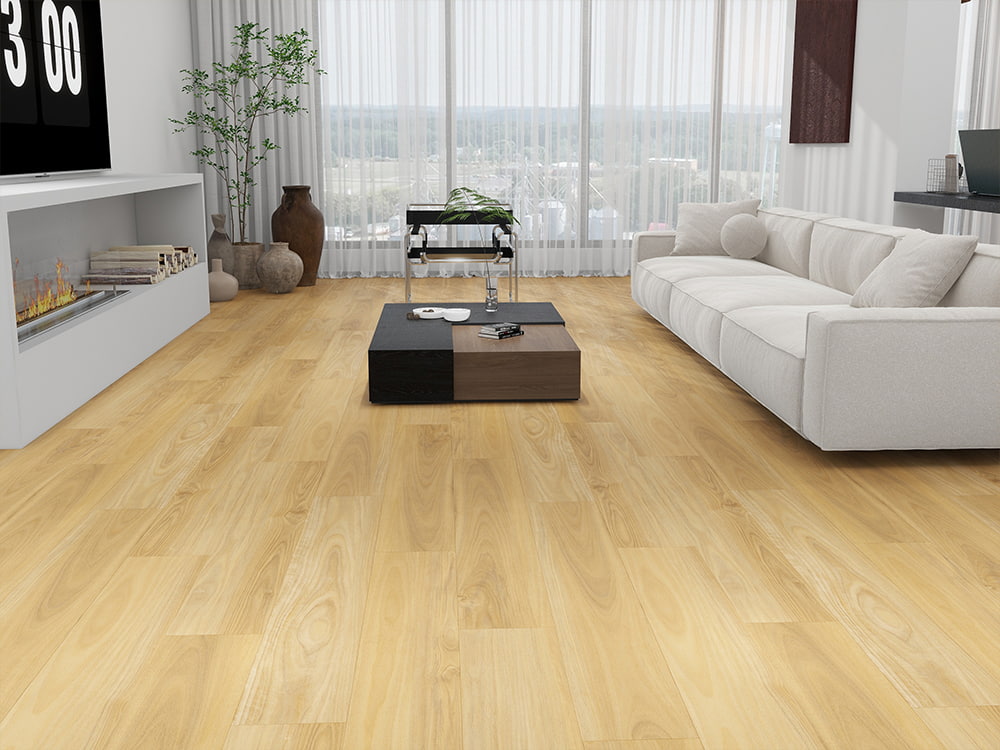 Rigid SPC Flooring with Customizable Colors and Wear LayersThis SPC flooring from Ousikai offers a wide range of color choices and customizable wear layers, allowing you to match the right grade to each room's traffic level while maintaining a consistent look throughout the space.View Product →
Beyond Thickness: What Else Determines Scratch Resistance
Wear layer thickness is the headline number, but a scratch-resistant SPC floor is actually the product of four interacting construction choices.
- Core board density: A denser SPC core resists denting, and dents create stress concentrations that crack the wear layer above.
- Embossing depth: Deeper wood grain texture visually masks fine scratches and catches light differently after wear develops.
- Topcoat quality: UV-cured polyurethane with aluminum oxide handles everyday scuffing better than basic acrylic topcoats.
- Bevel edge design: Painted bevels chip with repeated mopping; the edge construction affects how quickly the visible layer degrades at the plank edges.
How to Verify Wear Layer Quality Before You Buy
Verification is not about trusting the printed mil number. It is about asking the manufacturer for the evidence behind that number.
- Request the full construction stack - a cross-section photo with actual mm thickness for every layer.
- Ask for the third-party Taber abrasion report (ASTM D4060).
- Run a steel wool test on a sample with #0000 steel wool, 10 to 20 rubs in the same spot, and inspect for visible marking.
- Read the warranty terms - a 20mil floor with a 20-year residential warranty and 10-year commercial warranty tells you what the manufacturer expects.
Understanding how the rigid core sits beneath the wear layer helps buyers interpret those test reports correctly. What is SPC rigid vinyl flooring explains this construction.
Zhejiang Ousikai New Material Co., Ltd runs a factory testing lab where SPC production samples pass through Taber abrasion and quality checks. That is the kind of verification a serious buyer should require before locking a purchase order.
Frequently Asked Questions
Is a 20mil wear layer always better than 12mil?
Not always. A 20mil layer costs more and lasts longer in high-traffic spaces, but in a quiet bedroom a 12mil layer gives the same visual result at a lower cost. Match the grade to the traffic.
Can a 12mil wear layer handle a dog household?
It handles normal daily walking and cleaning, but pet claws in high-traffic zones wear it faster. A 20mil floor offers more insurance against visible print-through.
How do I know the wear layer thickness on a sample is real?
Ask for the cross-section measurement and the Taber test report. Independent verification is the only way to confirm the printed 12mil or 20mil number.
Does a thicker wear layer make the floor scratch-proof?
No. It reduces print-through and deep scratches, but surface scuffs still appear. Topcoat quality and core density matter just as much.

