
 English
 中文简体
 Español
How Stair Nosing Protects Stair Edges from Daily Wear
Why Stair Edges Take So Much Everyday Wear
The front of each step receives more concentrated contact than the middle of the tread. On the way up, the ball of the foot often lands near the nose; on the way down, the heel or mid-sole brushes the same line as weight transfers to the lower step. Over months of use that repeated pressure polishes, scuffs and compresses the edge long before the centre of the tread looks tired.
Shoes add abrasion. Grit trapped in sole patterns acts like fine sandpaper. Hard heels and rigid toes knock the corner on every hurried trip. Cleaning equipment adds another load: vacuum heads, mop frames and the occasional knock from furniture being moved all find the protruding front edge first. Where the step is left as a raw cut of board, plank or substrate, that corner chips, frays or darkens while the rest of the flight still looks acceptable. The staircase then appears worn overall because the eye reads the damaged line of noses before it reads the intact fields of the treads.
Unprotected edges also affect how flooring systems terminate. Resilient coverings that wrap or stop at the nose without a dedicated profile can lift, crease or thin at the bend. Timber and composite fronts can splinter. In both cases the underlying material is exposed to moisture from cleaning and to further mechanical hits. Edge protection is therefore as much about preserving the stair build-up as about keeping a tidy look.
How Stair Nosing Shields Those Edges
Covering the Exposed Front of Each Step
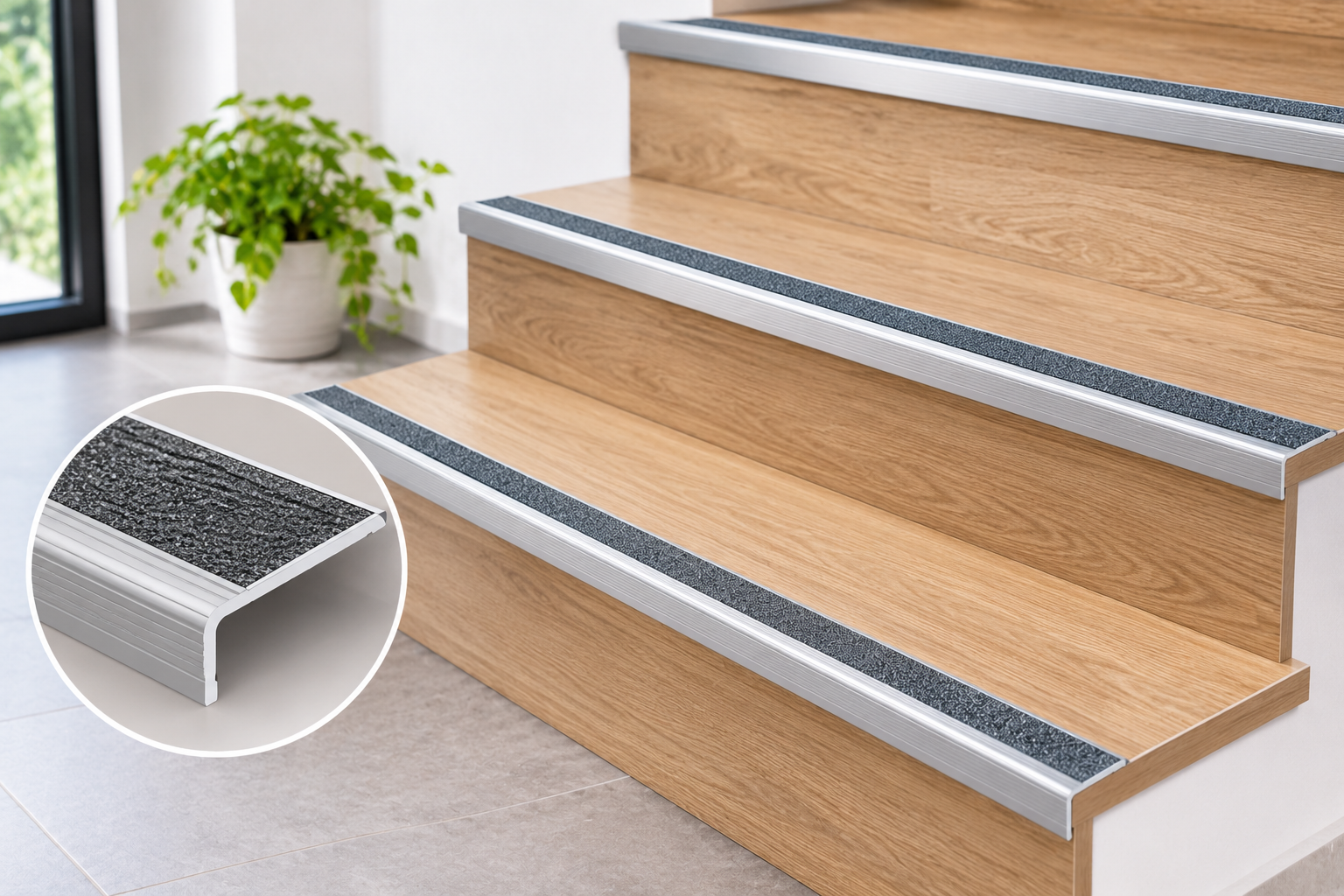
Stair nosing is a profile fixed along the front edge so that shoes and cleaning tools meet the nosing surface instead of the bare substrate corner. The covering turns a vulnerable cut edge into a finished band designed for contact. Wear still occurs, but it is taken by a component selected for that duty rather than by the structural or decorative core of the step.
Shielding Vulnerable Corners from Direct Hits
The geometry of a nosing profile wraps or caps the front corner. Direct impacts land on the profile's outer face and radius rather than on a sharp substrate edge. Chipping and crushing of the core material are reduced when the nosing remains firmly bonded or fastened along its length.
Defining the Transition from Tread to Riser Line
A clear transition between the walking surface and the vertical face of the step keeps the front edge consistent from one tread to the next. That consistency matters for appearance and for even wear: high spots and exposed lips wear faster than a continuous, level nosing line.
Reducing Direct Wear on the Underlying Stair Material
When the profile stays in place, scuffs and polish marks accumulate on the nosing rather than on the vinyl, timber or composite underneath. Replacement or refinishing can then focus on the profile if needed, instead of on rebuilding every step front. A Safe Tread Stair Nosing arrangement works on this principle of sacrificial, replaceable edge coverage within a complete stair finish.
Protective Advantages of Stair Nose Profiles
Protective Edge Coverage
Full coverage of the exposed front edge limits scratches, scuffs and corner damage on the material beneath. Gaps, short lengths or poorly seated sections leave strips of substrate still open to wear, so continuous seating along the tread width is part of the protective effect.
Surface Intended for Regular Stair Traffic
The visible face is produced for repeated foot contact. Actual wear life depends on the material formulation, traffic intensity and cleaning methods. Product literature and sample evaluation remain the basis for judging suitability on a given project rather than general claims about toughness.
Secure Edge Finishing
A properly fixed nosing creates a defined, stable finish at the front of the tread. Movement underfoot or visible gaps signal that protection is incomplete and that the profile needs refixing before wear reaches the substrate again.
Compatibility with Vinyl Flooring Systems
On stairs finished with vinyl, a matching or compatible nosing completes the edge so the resilient surface does not end in a thin, unsupported lip. Coordination of thickness and profile shape with the vinyl system keeps the covering and the nose working together. Vinyl Flooring Stair Tread Nosing is chosen when that coordinated edge is required on vinyl-covered flights.
Consistent Appearance Across the Flight
Identical profiles on every step produce a uniform front line. The staircase reads as a single finished element rather than as a set of treads with randomly worn corners.
How Nosing Helps Maintain Stair Appearance
Direct contact with shoes and tools is shifted onto the nosing face, so the decorative or structural edge stays covered. Front edges continue to look intentional rather than chewed or rounded by traffic. Transitions between field flooring and the step front are hidden inside the profile instead of showing as raw joints. Across a full flight, that repetition of clean noses preserves the original design intent for longer between refurbishments.
Appearance maintenance is still linked to cleaning. Abrasive pads and harsh residues can mark nosing surfaces as they mark any floor finish. Methods recommended for the profile material keep the edge looking even while the protective function continues.
Why Stair Nose Profiles Suit Edge Protection Projects
Profiles built for stair edges combine coverage of the corner with a tread face that belongs visually to the walking surface. They suit residential halls and commercial interiors where stairs are in constant view and under constant use. On projects that already specify vinyl on the treads, compatible nosing avoids a mismatch between soft covering and hard, unprotected edge. The result is a practical finishing detail that serves durability as well as line and colour.
Selection still depends on step geometry, flooring thickness and fixing method. A profile that is too thin for the build-up, or fixed with an unsuitable adhesive, will not protect the edge for long. Matching the product to the stair system is part of the protective strategy.
Edge Wear Factors and Nosing Responses
| Wear factor | Effect on unprotected edge | Role of stair nosing |
|---|---|---|
| Repeated foot pressure | Polishing and compression at the nose | Contact moves to the profile face |
| Shoe abrasion and grit | Scratches and loss of surface finish | Profile surface takes the abrasion |
| Impacts from toes and objects | Chipping of sharp corners | Radius and cover absorb the hit |
| Cleaning tools | Scuffing along the front line | Nosing shields the substrate corner |
| Flooring termination at nose | Lifting or thinning of covering | Profile clamps and finishes the edge |
| Uneven wear across the flight | Some steps look older than others | Uniform profiles keep a consistent front |
Installation and Ongoing Care
Protection only holds if the nosing stays fully seated. Surfaces must be clean and sound before fixing. Recommended adhesives or fasteners are used so that traffic cannot peel the profile from the front edge. After installation, checks for lift, hollow spots or proud ends prevent early failure. In busy buildings, periodic inspection catches loose sections before the substrate is exposed again.
Cleaning products suited to the nosing material prevent unnecessary surface damage. Grit should be removed rather than ground into the tread face. Where a profile eventually shows its age, replacement of the nosing is usually simpler than repairing every step core.
Limits of Edge Protection
Nosing reduces direct wear on the stair edge; it does not make the stair immune to damage from heavy impacts, tracked-in stone or neglect. Structural movement in the staircase, water ingress and incorrect fixing can all defeat the cover. Edge profiles are one layer in a wider approach that includes correct stair construction, suitable flooring and routine care.
Preserving Step Fronts Through Dedicated Edge Profiles
Stair nosing protects daily-use edges by covering the front corner, taking scuffs and impacts on a surface meant for traffic and finishing the transition between tread and riser line. Residential and commercial flights, including those with vinyl treads, keep a more consistent appearance when profiles are correctly matched and securely installed. Zhejiang Ousikai New Material Co.,Ltd produces flooring-related profiles including stair nosing for indoor edge finishing. Review of profile shape, material suitability, vinyl or other flooring compatibility and fixing method against the stair design supports selection of nosing that shields step fronts from repeated contact and helps maintain a finished look across the flight.

