
 English
 中文简体
中文简体 Español
Can SPC Flooring Replace WPC Flooring in Projects?
Flooring selection decisions have a habit of becoming more complicated than they initially appear. A material that works well in one context fails to meet expectations in another — and the cost of realizing that after installation is considerably higher than figuring it out beforehand. For contractors, designers, and procurement teams comparing rigid core flooring options, the SPC versus WPC question keeps surfacing. Both look similar on a specification sheet. Both are waterproof. Both install without adhesive. Yet they behave differently in service, and working with a reliable WPC Flooring Supplier who understands those differences is often what separates a well-matched material selection from one that creates problems down the line.
What Is the Structural Difference Between SPC and WPC?
The core distinction between these two materials is compositional, and it produces performance differences that ripple through every aspect of how each floor behaves.
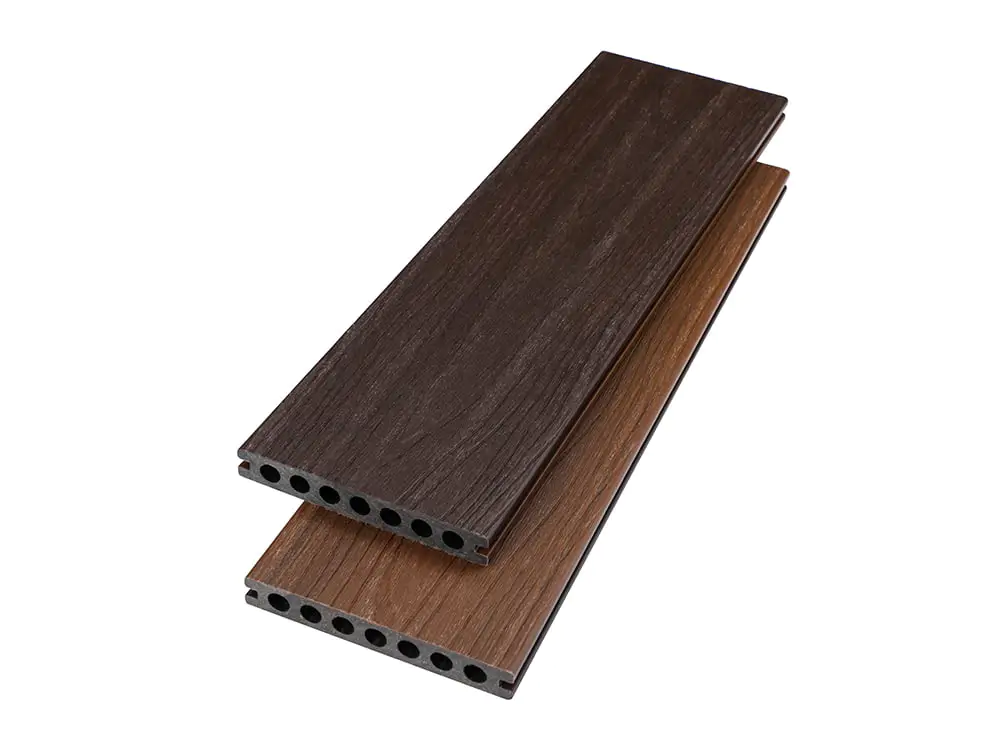
SPC — stone plastic composite — is built around a core of limestone powder and PVC resin. The resulting board is dense, rigid, and dimensionally stable under temperature change. It does not flex. It does not compress underfoot. When you walk on it, you are essentially walking on a very thin, very hard composite panel.
WPC — wood plastic composite — uses a foamed core that incorporates wood fiber or wood flour with PVC. The foam structure creates a board that is thicker, lighter per square foot, and noticeably softer underfoot. It has some give when compressed, which changes the acoustic and comfort characteristics of the finished floor significantly.
Neither is simply a better version of the other. They are different constructions designed to perform differently, and understanding what each does well is the starting point for any meaningful project comparison.
How Does Rigidity Affect Real-World Performance?
Rigidity sounds like a straightforward advantage — harder is more durable. The reality is more nuanced than that.
SPC's high density gives it genuine advantages in high-traffic environments. Under rolling loads — wheeled furniture, trolleys, industrial carts — it resists indentation where a softer WPC board might show permanent compression over time. In commercial spaces where floors endure years of heavy use, that resistance translates into longer surface life before wear becomes visible.
The same rigidity, though, changes the feel underfoot in ways that matter for residential comfort. A hard SPC floor over a concrete substrate transmits impact sound efficiently — footsteps are crisper and more audible. It also provides less cushion over long periods of standing, which affects comfort in kitchens or any space where people stand for extended periods.
WPC absorbs impact differently. The foam core dampens sound and provides a softer feel that many residential buyers expect from a floor that replaces carpet or traditional timber. In bedrooms, living rooms, and apartments, this comfort characteristic carries real weight in occupant satisfaction.
The question for any project is not which property is inherently better — it is which property the application actually needs.
Does Waterproofing Performance Differ Between the Two?
Both SPC and WPC are waterproof at the core level, meaning water cannot penetrate the board itself. This is a genuine advantage of both materials over traditional laminate or engineered timber flooring, and it is frequently cited as a reason both are well-suited to kitchens, bathrooms, and below-grade installations.
The distinction worth noting is how each material responds to prolonged water exposure at the surface and joints.
SPC's denser composition means there is essentially no substrate that can absorb moisture even at cut edges or around fixtures. The limestone-PVC core simply does not take on water. WPC's foamed core is also waterproof in standard conditions, but some lower-quality WPC formulations can show moisture sensitivity at cut edges over time — particularly in wet rooms where standing water sits against the floor perimeter.
For projects in high-moisture environments — commercial bathrooms, changing rooms, laundry areas — SPC's density advantage adds a margin of reliability that some project specifications find worth having. For standard residential installations, the practical waterproofing performance of quality WPC is entirely adequate.
Which Project Types Are Better Suited to SPC?
SPC tends to perform more reliably in the following scenarios:
- High-traffic commercial spaces — retail stores, hotel corridors, office areas where rolling loads and foot traffic are continuous
- Spaces with significant temperature variation — SPC's dimensional stability under thermal cycling is stronger than WPC's, making it a more reliable choice in spaces with underfloor heating or significant seasonal temperature swings
- Projects where installation speed matters — SPC boards are typically thinner and lighter, which simplifies handling and can accelerate installation across large floor areas
- Budget-sensitive commercial fit-outs — SPC is generally priced lower than equivalent WPC, and over large areas, that difference accumulates meaningfully
- Subfloor conditions that are not perfectly smooth — SPC's rigidity means it bridges minor subfloor irregularities more effectively than WPC, reducing the time spent on subfloor preparation
The combination of lower cost, higher density, and better thermal stability explains why SPC has progressively taken market share from WPC in commercial applications specifically.
Where Does WPC Still Hold a Clear Advantage?
There are project types where WPC's characteristics genuinely suit the application better, and replacing it with SPC in those contexts creates a trade-off that buyers and end users notice.
WPC performs better in:
- Residential bedrooms and living spaces where comfort underfoot and acoustic softness matter to occupants
- Properties where noise transmission between floors is a concern — WPC's foam core absorbs impact sound at source, reducing the need for additional acoustic underlay
- Projects marketing to buyers who expect a warm, timber-like feel — WPC's greater thickness and give underfoot creates a floor that reads as more premium in a residential context, even when the surface finish is identical to SPC
- Spaces where people stand for long periods — the softer core reduces fatigue compared to the harder SPC surface
- Renovation projects over older substrates that have minor irregularities — WPC's thickness and slight flexibility help it conform and feel more even underfoot even when the subfloor is not perfectly prepared
These are real performance differences, not marketing distinctions. A buyer who specifies SPC for a high-end residential development and expects it to perform like WPC in terms of comfort will encounter occupant dissatisfaction that is difficult to explain without referencing material choice.
How Do the Two Materials Compare Across Key Factors?
A direct comparison across factors that commonly drive project selection:
| Factor | SPC Flooring | WPC Flooring |
|---|---|---|
| Core composition | Limestone and PVC | Foamed wood fiber and PVC |
| Board density | Higher | Lower |
| Rigidity | High — minimal flex | Moderate — slight give underfoot |
| Comfort underfoot | Harder feel | Softer, more cushioned feel |
| Acoustic performance | Lower sound absorption | Better impact sound dampening |
| Thermal stability | Strong — suits underfloor heating | Adequate — less stable under wide temperature swings |
| Waterproof performance | Full waterproof at core | Full waterproof — quality-dependent at edges |
| Indentation resistance | Higher | Moderate |
| Typical board thickness | Thinner | Thicker |
| Material cost | Generally lower | Generally higher |
| Primary suitability | Commercial and high-traffic spaces | Residential and comfort-focused spaces |
| Installation weight | Lighter per unit area | Heavier per unit area |
Reading across this comparison, the pattern is consistent: SPC favors performance and cost in commercial contexts; WPC favors comfort and feel in residential ones. Projects that sit at the boundary between those contexts are where the substitution decision becomes genuinely nuanced.
What Does Substitution Mean for Installation?
When a project switches from WPC to SPC mid-design or during procurement, a few practical considerations affect the installation outcome.
Thickness difference is an immediate issue. SPC boards are typically thinner than WPC equivalents. Switching materials means the finished floor height changes. In renovation projects where flooring transitions to an adjacent room already floored in a different material, a thickness change creates a level difference that requires transition strips or threshold adjustments. In new construction, the change is easier to accommodate at the framing stage.
Acoustic underlay requirements may increase when substituting SPC for WPC. WPC's foam core handles some of the acoustic dampening that might otherwise require a separate underlay layer. When specifying SPC in a noise-sensitive residential application, adding an appropriate acoustic underlay beneath it can recover much of the comfort and sound performance difference.
Subfloor preparation standards are similar for both materials, but SPC's rigidity means any residual subfloor imperfection is more likely to transmit through the board to the surface — you feel it underfoot even if you cannot see it. Both materials benefit from a flat, clean substrate, but SPC is less forgiving of subtle unevenness.
Why Are More Developers Moving Toward SPC?
Over the past several years, the balance in the flooring market has shifted noticeably toward SPC in commercial and mixed-use development. Several factors explain the trend.
Cost pressure in commercial fit-outs is real. SPC's lower material price across large floor areas represents a meaningful budget difference on a per-square-meter basis. When multiplied across an entire hotel floor, a retail chain's store network, or a multi-unit apartment building, the savings are not trivial.
SPC's transport efficiency also matters at scale. Thinner, denser boards pack more efficiently into shipping containers, reducing freight cost per square meter delivered. For developers sourcing from a China WPC flooring supplier or importing through a WPC flooring manufacturer with global distribution, that logistics advantage compounds across large orders.
Performance durability in high-traffic commercial spaces is another driver. Hotels, offices, and retail environments have learned through experience that WPC's softer core shows wear more visibly under sustained commercial loads. SPC holds its surface condition longer under those conditions, which reduces refinishing and replacement cycles.
None of this means WPC is being displaced entirely. It continues to be the preferred specification for premium residential projects where comfort is a differentiator. What has changed is that the default assumption — that WPC is the go-to luxury vinyl option — has given way to a more application-specific evaluation.
How Should Procurement Teams Frame the Decision?
Rather than asking whether SPC can replace WPC in general, the more useful question is whether the specific project's performance requirements are better served by one material or the other.
A practical decision framework:
- What is the primary use? If commercial with heavy traffic: lean toward SPC. If residential with comfort priority: lean toward WPC.
- What are the acoustic requirements? If sound transmission between floors is a concern: factor in WPC's natural dampening or budget for SPC with added acoustic underlay.
- What is the temperature environment? Underfloor heating or significant seasonal variation: SPC handles dimensional stability better.
- What is the budget sensitivity? Large areas where cost per square meter matters significantly: SPC offers a genuine cost advantage.
- What do end users expect? Residential buyers expecting a warm, cushioned feel may notice and comment on SPC's harder surface — that is a client management consideration.
Working through these questions by project rather than applying a single material standard across all projects leads to better material-performance alignment and fewer post-installation complaints.
Making the Right Choice for Each Project
SPC can substitute for WPC in a meaningful range of projects — commercial spaces, high-traffic areas, temperature-variable environments, and budget-sensitive fit-outs are all contexts where the substitution makes practical sense. In comfort-driven residential applications, the substitution involves trade-offs that are worth understanding clearly before committing to a specification. The key is treating the decision as project-specific rather than categorical. Both materials have genuine strengths, and the ability to match those strengths to what a project actually needs is what separates a well-specified floor from one that looks right on paper but disappoints in use. For procurement teams, developers, and designers evaluating flooring options across different project types, working with a supplier who can advise on material performance in context — not just product features in isolation — makes that matching process more reliable. Zhejiang Ousikai New Material Co.,Ltd offers both SPC and WPC flooring solutions with the application knowledge to support project-specific selection decisions, helping buyers across residential, commercial, and mixed-use developments get the material match right from the specification stage forward. If your current project involves a material substitution decision or a comparison between the two options, reaching out with the project details is a practical starting point.

