
 English
 中文简体
中文简体 Español
Why Matching Accessories Matter for WPC Flooring
A flooring project rarely fails because of the planks themselves. More often, the problems show up at the edges — gaps that were never covered, transitions between rooms that look unfinished, stair edges that wear down unevenly, or walls where the flooring simply stops without any clean termination. These are not installation errors in the conventional sense. They are the result of treating the floor as the whole project, when it is really just one component of a system. Working with a reliable WPC Flooring Supplier means more than sourcing quality planks — it means understanding that the accessories surrounding those planks determine how the finished project actually looks and holds up over time.
The Floor Itself Is Only Part of the Installation
WPC flooring expands and contracts with changes in temperature and humidity. This is not a flaw — it is a built-in characteristic of composite materials, and it is why installation guidelines call for expansion gaps around the perimeter of every room.
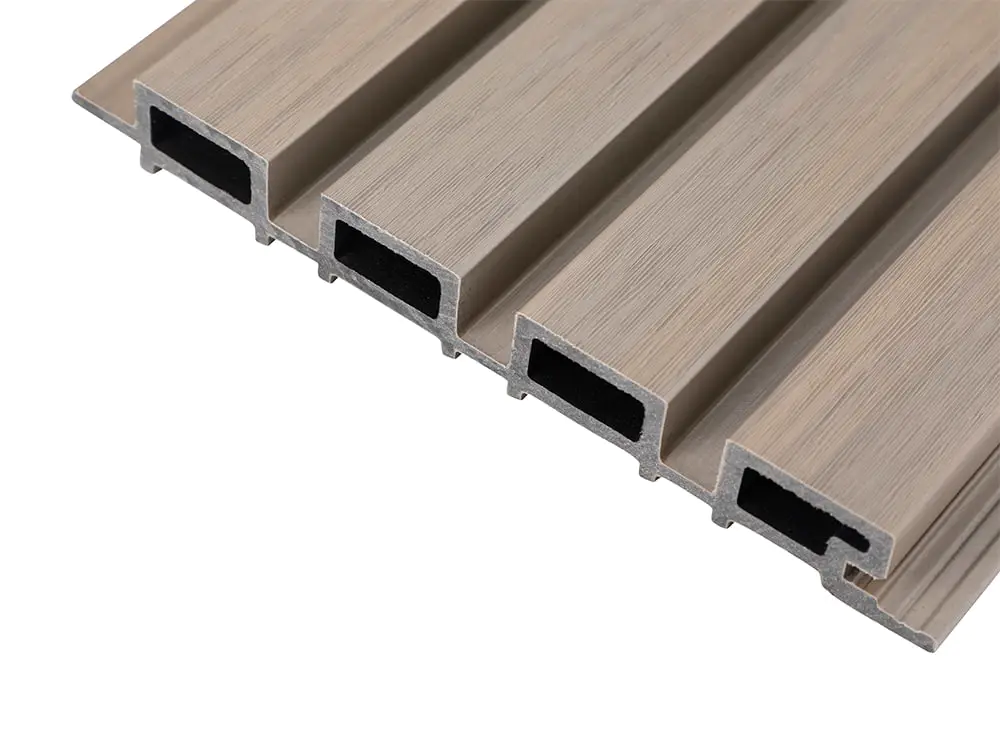
Those gaps, however, need to be covered. Left exposed, they collect debris, look unfinished, and create a visual break that undermines the quality of the flooring beneath. The accessories designed to cover them — skirting boards, edge trims, and transition strips — are not decorative afterthoughts. They are functional components that make the installation complete.
Without them, even a well-laid floor looks like a work in progress.
What Are the Core Accessories That WPC Flooring Projects Require?
Different zones of a flooring installation create different finishing needs. A living room, a bathroom threshold, a staircase, and a doorway between two rooms each present a specific challenge that requires a specific solution.
| Accessory Type | Application Zone | Primary Function |
|---|---|---|
| Skirting Boards | Perimeter walls | Covers expansion gaps; protects wall base |
| T-Molding / Transition Strips | Doorways between rooms | Creates smooth transition between flooring surfaces |
| Reducer Strips | Height changes between floors | Bridges the gap between floors of different thickness |
| Stair Nosing | Stair edges | Protects step edges; improves safety on stairways |
| End Caps | Sliding doors, room edges | Provides clean termination at open floor ends |
| Underlay / Moisture Barrier | Beneath the planks | Reduces sound transmission; manages moisture from below |
Each of these serves a purpose that the flooring plank itself cannot fulfill. Together, they close out the installation in a way that reflects the quality of the flooring material.
Why Do Expansion Gaps Create Problems Without the Right Coverage?
WPC flooring is dimensionally stable compared to solid wood, but it still moves. Heat causes slight expansion. Cold causes slight contraction. Over a large floor area, that movement accumulates — which is why installers leave a gap between the flooring and the wall.
The problem is that gap is not small. In a large room, it can be wide enough to be clearly visible, collect dust and debris over time, and create an uneven edge where the floor meets the wall. Skirting boards solve this entirely — they sit flush against the wall, overlap the gap, and give the perimeter of the room a finished line.
When skirting boards are sourced separately after the project is complete, the color match is rarely exact. Texture and finish variation between batches, even from the same category of product, can make the accessory look like it belongs to a different project. Sourcing everything together from a WPC Flooring Manufacturer eliminates that risk.
How Do Transition Strips Handle Movement Between Rooms?
Flooring rarely covers just one room. In residential and commercial projects, the same material continues through hallways, into adjacent spaces, and sometimes across multiple floors of a building. Where two flooring sections meet — particularly at doorways — a transition strip bridges the junction cleanly.
Without one, the joint between two sections of flooring is exposed. Foot traffic pushes the edges apart over time. Moisture gets into the seam. The planks at the joint begin to show wear faster than the rest of the floor.
A properly fitted T-molding or transition strip holds the joint in position, protects the edges of both flooring sections, and creates a visual line that reads as intentional rather than incomplete. In high-traffic doorways especially, this is not a cosmetic consideration — it is a durability one.
Stair Nosing: A Safety Consideration That Gets Overlooked
Stairs present a specific finishing challenge that flat-floor accessories cannot address. The exposed edge of each step — the nosing — takes concentrated foot traffic on a surface that is already a fall risk if poorly maintained.
WPC flooring on stairs without proper nosing strips tends to show edge wear faster than the rest of the installation. The corner of each step, where the tread meets the riser, is a weak point unless it is protected by a profile designed for that specific geometry.
Stair nosing serves two functions simultaneously:
- It protects the physical edge of the step from chipping and delamination under repeated impact
- It creates a visible contrast line that helps people see where one step ends and the next begins — reducing slip risk, particularly in lower-light conditions
For commercial projects or multi-level residential buildings, stair nosing is often required under building safety standards. Treating it as optional creates both a performance and a compliance risk.
Does Underlay Affect How WPC Flooring Performs?
Underlay sits below the flooring planks, invisible once the installation is complete — which may be why it is often treated as an optional extra rather than a functional layer. In practice, it influences several aspects of how the floor feels and behaves.
WPC flooring has some built-in acoustic properties, but in multi-story buildings or spaces where sound transmission is a concern, the underlay adds a meaningful additional layer of noise reduction. It also acts as a slight thermal buffer between the subfloor and the finished surface.
On subfloors that are not perfectly level, underlay helps compensate for minor surface variation without putting stress on the locking joints of the planks. And in areas where moisture migration from a concrete subfloor is possible, a moisture barrier underlay protects the underside of the flooring from long-term humidity exposure.
Whether a project needs a basic foam underlay or a more substantial barrier depends on the subfloor type and the application. Working with a China WPC Flooring supplier who can advise on underlay selection alongside the flooring itself simplifies that decision considerably.
Why Ordering Everything Together Saves Time and Cost
Procurement decisions about accessories are often deferred. The flooring gets ordered, the project timeline gets locked in, and then someone realizes near the installation date that skirting boards, transitions, and nosing profiles still need to be sourced.
At that point, the options narrow. Local availability may be limited. Color matching becomes difficult because the original flooring batch is no longer available in the same production run. The time needed to receive separately ordered accessories can delay the installation schedule.
The cost of late accessory procurement is rarely just the price of the items. It includes:
- Delay costs if the installation crew is waiting on materials
- Price premiums for urgent sourcing
- Visual inconsistency if color or finish matching is imprecise
- Rework if temporary solutions were put in place that need to be corrected
Ordering accessories as part of the original flooring procurement removes all of these risks. It also gives the buyer clearer visibility into the full project cost from the beginning, rather than discovering additional expenses partway through.
How Do Accessories Affect the Long-Term Durability of a WPC Flooring Project?
A floor that is properly finished with matching accessories does not just look better on the day of installation. It holds up differently over time.
Skirting boards prevent the flooring edges from being caught by cleaning equipment, furniture movement, or foot traffic near walls. Transition strips prevent the joints between flooring sections from opening under use. Stair nosing protects the step edges that would otherwise deteriorate faster than any other part of the installation.
In commercial environments — retail spaces, offices, hospitality venues — this durability difference becomes financially significant. A floor that requires remedial work on its edges and transitions after a relatively short period of use generates maintenance costs and disruption that a well-accessorized installation avoids.
The flooring plank may carry a lengthy warranty, but the condition of the accessories around it determines how realistic it is to reach the end of that warranty period with the installation still looking intact.
What Should Buyers Ask When Sourcing WPC Flooring and Accessories Together?
Not all suppliers carry accessories that genuinely match their flooring range. Some offer a limited selection of generic profiles that approximate a match. Others provide a full coordinated accessory system designed to complement specific flooring collections.
When evaluating a supplier, it is worth asking:
- Are the skirting boards and trims available in finishes that correspond directly to the flooring collection?
- Can transition strips be provided in the correct height profile for the specific flooring thickness?
- Is stair nosing available in a format compatible with the plank dimensions?
- Can underlay be supplied as part of the same order?
- What is the waiting period for accessories compared to the flooring itself?
Suppliers who can answer these questions clearly and supply everything from one source are generally better positioned to support a complete installation outcome — rather than simply fulfilling a flooring order.
Closing Thoughts
Flooring accessories are not a secondary purchase. They are part of the installation system, and the quality of a finished project reflects whether they were chosen thoughtfully or treated as an afterthought. For contractors, distributors, and procurement teams who want projects to hold up visually and structurally over time, sourcing accessories together with the flooring — from a supplier who treats them as a coordinated system — is the more reliable approach. Zhejiang Ousikai New Material Co.,Ltd supplies WPC flooring alongside a coordinated range of matching accessories, including skirting boards, transition strips, stair nosing, and underlay options suited to residential and commercial applications. For buyers who want to avoid the common problems that come from accessory mismatches and late procurement, reaching out with your project specifications is a practical starting point for a complete flooring solution.

