
 English
 中文简体
中文简体 Español
Is Wood Decking Better Than WPC Flooring for Your Space?
Not every project that looks like a composite flooring job actually is one. Designers, contractors, and developers who have worked with both materials long enough know this. The conversation about decking and outdoor flooring has shifted considerably in recent years — composite materials have grown in capability, availability, and acceptance. But natural wood has not disappeared from serious projects. If anything, the rise of WPC Flooring as a mainstream option has clarified, rather than eliminated, the conditions under which traditional timber still makes more sense. Understanding those conditions is not a niche concern. It is a material selection skill.
Why the Question Is Not "Which Is Better"
The Problem With One-Size Comparisons
Material comparisons often start from the wrong position. They line up features — durability, maintenance, cost, lifespan — and declare a winner. That framing works well for commodities. It works less well for architectural materials, where the project context changes what "better" actually means.
A composite decking board that performs well on a suburban residential deck in a temperate climate may be entirely the wrong choice for a high-end hospitality terrace where the design brief specifically calls for aged, oiled hardwood to match an interior aesthetic. The composite did not fail at being composite. It simply was not what the project required.
The more productive question is: under what specific conditions does traditional wood decking become the more appropriate material? That question has concrete answers.
Where Natural Wood Still Has a Genuine Advantage
Aesthetic Authenticity That Composites Cannot Replicate
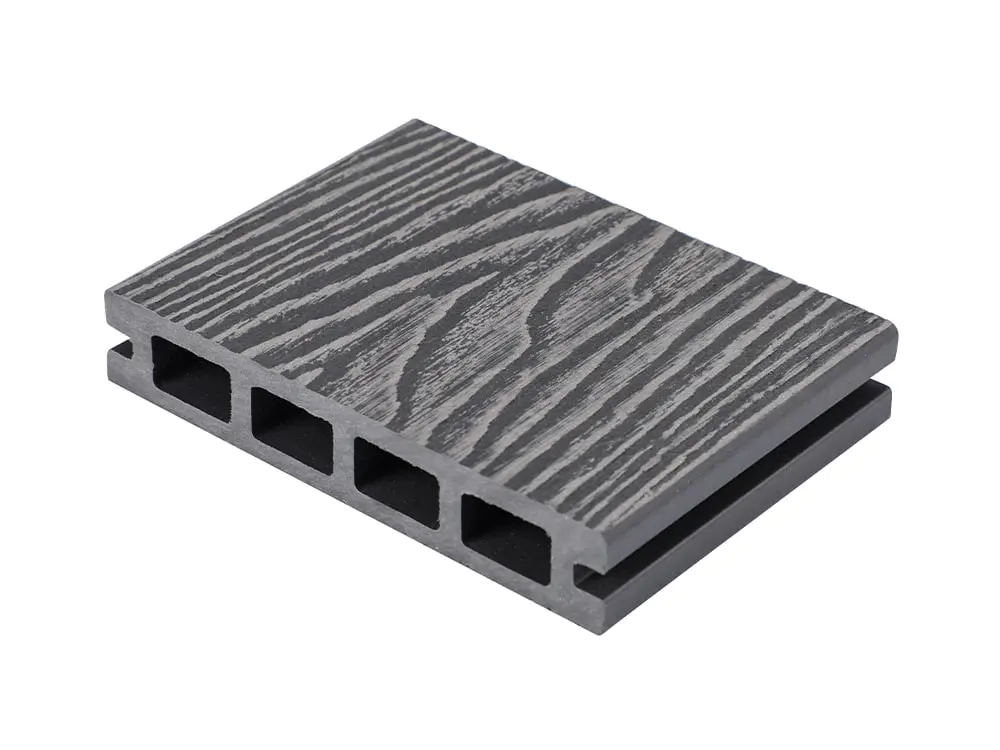
Composite materials have improved dramatically in their visual simulation of natural wood. Embossed grain patterns, varied color runs, and matte finishes have narrowed the visual gap considerably. But narrowed is not the same as closed.
Certain project types remain sensitive to the difference:
- High-end hospitality and residential design — clients in luxury settings often have direct experience with both materials and respond to natural wood in ways that composite products, regardless of quality, do not replicate. The variation in grain, the imperfections, and the way the surface weathers are part of the aesthetic value rather than a liability
- Heritage and restoration contexts — buildings with period design requirements or conservation guidelines may specify natural timber to maintain architectural continuity
- Interior-exterior continuity — when a project runs the same flooring material from inside to outside across a threshold, natural timber may be the only way to achieve visual and tactile consistency
- Photography and film environments — sets, showrooms, and commercial interiors where material authenticity is part of the brand story
In these contexts, a composite material is not a substitute — it is a different product category being forced into a role it was not designed for.
The Tactile Dimension: Does It Matter?
What Touch Communicates That Vision Does Not
Flooring is not only a visual surface. People walk on it barefoot, sit on it, run hands along edges, feel temperature differences underfoot. Natural wood has a thermal and tactile quality that composite materials — even well-engineered ones — have not fully reproduced.
Wood feels warmer to bare feet in cool weather because of its lower thermal conductivity. It has a surface texture that changes with age and finishing rather than remaining static. When refinished, it presents a genuinely different surface rather than a refreshed version of the same one. These qualities matter in environments where sensory experience is part of the value being delivered — outdoor dining areas, resort walkways, children's play spaces, and wellness facilities among them.
This is not a sentiment argument. It is a functional one. If the project's user experience depends on a particular sensory quality, material selection needs to account for whether that quality can actually be achieved with the available options.
Refinishing Flexibility: A Practical Advantage of Natural Wood
The Ability to Renew Is a Long-Term Asset
WPC products are sold partly on the basis of low maintenance — and for many applications, that advantage is real. But low maintenance is not the same as zero maintenance, and it comes with a significant constraint: composite surfaces cannot be meaningfully refinished when they show wear.
A composite decking board that has developed surface scratches, fading, or traffic wear patterns can be cleaned but not restored. Once the wear layer is compromised, the appearance is fixed. The only remediation is replacement.
Natural hardwood operates differently. A worn or weathered timber surface can be sanded back and refinished — sometimes multiple times over a long service life. The grain that emerges after refinishing is often visually richer than the surface that was there before. For owners who intend to hold a property long-term and want the ability to maintain appearance without full replacement, this refinishing flexibility is a meaningful practical advantage.
The trade-off is maintenance commitment. That flexibility comes with the requirement to actually perform the maintenance. Owners who want low engagement with their flooring will find composite materials a better fit. Owners who are willing to maintain a natural surface in exchange for longevity and adaptability may find timber more suited to their situation.
Comparing the Two Materials Across Key Decision Variables
The choice between composite and natural timber involves multiple variables that interact differently depending on project type, climate, and owner priorities.
| Decision Variable | WPC Flooring | Traditional Wood Decking |
|---|---|---|
| Moisture and water resistance | Strong — core does not absorb water | Requires treatment; vulnerable if untreated |
| Maintenance requirement | Low — cleaning is primary task | Moderate to high — periodic treatment and inspection |
| Refinishing capability | Not refinishable | Can be sanded and re-finished |
| Visual authenticity | High-quality simulation | Genuine natural variation |
| Tactile quality | Consistent, stable | Warmer, changes with age and finish |
| Performance in UV exposure | Good with quality wear layer | Variable — some species handle UV well, others require UV protection |
| Insect and rot resistance | Inherent in composite structure | Species and treatment dependent |
| Design customization | Limited to available product formats | Can be cut, shaped, and finished to specification |
| Long-term cost profile | More stable, fewer surprises | Variable depending on maintenance discipline |
| Sourcing flexibility | Dependent on manufacturer range | Wide range of species and grades available |
Neither column wins across the board. The pattern that emerges is that WPC performs consistently across a range of conditions with low owner engagement, while natural wood offers higher design flexibility and restoration potential in exchange for active maintenance.
Climate and Environment: When Conditions Favor One Over the Other
How Geography Shapes Material Suitability
Climate plays a larger role in material selection than many buyers acknowledge during the specification stage. WPC handles moisture well. It does not swell, warp, or rot under wet conditions the way untreated timber does. In humid coastal climates, tropical environments, or spaces with frequent water exposure, that resistance simplifies long-term management significantly.
But climate affects wood behavior differently depending on species, grade, and treatment. Certain hardwoods — dense, oily tropical species in particular — handle moisture, UV, and temperature cycling with minimal intervention. In dry climates with stable temperature ranges, the maintenance demands on a well-specified timber installation are genuinely modest.
The conditions where composite materials hold a clear advantage over untreated or softwood timber:
- Coastal environments with salt air and high humidity
- Decks around pools or water features with regular splash exposure
- Climates with frequent freeze-thaw cycles that stress wood fibers
- Applications where the owner is not available for seasonal maintenance
The conditions where a well-chosen hardwood competes more closely:
- Dry or temperate climates with moderate UV exposure
- Projects where design continuity with an existing natural material palette is required
- Long-term ownership situations where refinishing investment is acceptable
- High-end projects where material authenticity is a design priority
Does Sustainability Factor Into the Decision?
The Environmental Argument Is More Complex Than It Appears
Both materials carry sustainability claims, and both carry genuine sustainability concerns. WPC uses wood fiber in its composition, reducing the demand for full timber volume, and its long service life with low maintenance reduces replacement frequency. On the other hand, composite materials mix wood and plastic in ways that make end-of-life recycling genuinely difficult.
Natural timber from certified sustainable sources is a renewable material that sequesters carbon during its growing phase and can be disposed of or composted at end of life without creating persistent material waste. The concern with natural wood is sourcing — not all timber is harvested responsibly, and the supply chain for tropical hardwoods in particular includes species and regions where certification cannot be fully verified.
For projects where sustainability certification is a procurement requirement, both materials require careful supply chain documentation. Neither automatically satisfies the requirement without verification. A composite product sourced from a China WPC Flooring factory with documented environmental certification may carry a more traceable supply chain than natural timber from an unverified source — or the reverse may be true. The material category itself is not the determining factor.
Design Intent Should Drive the Decision, Not Default Preference
Choosing From the Project Out, Not the Material In
The pattern that emerges from careful material selection is that the decision works well when it starts from the project’s requirements instead of from a default preference for one material category. Default preferences — "composite is more practical" or "natural materials look better" — are shortcuts that create mismatches when applied to projects with specific conditions.
A useful decision framework for outdoor and decking applications:
- Identify the environment — climate, moisture exposure, UV intensity, and freeze-thaw conditions
- Clarify the design intent — is visual authenticity, tactile quality, or design continuity with other materials a primary requirement?
- Assess owner maintenance capacity — how much engagement with the surface is realistic over a ten-year horizon?
- Consider the project timeline — is this a long-term hold with refinishing potential, or a lower-engagement installation?
- Evaluate cost over lifecycle, not just at installation
Working through these questions often reveals that the "obvious" material choice is less obvious than it seemed, and that the right selection depends on factors that were not initially part of the conversation.
Selecting the Right Supply Partner for Your Project
Material decisions are easier when the supplier can provide products across the spectrum of project requirements and can discuss application fit honestly rather than promoting a single category. Zhejiang Ousikai New Material Co., Ltd. develops WPC Flooring and related composite surface products for a range of applications, with product specifications designed to help buyers match material to project conditions. Their team works with architects, contractors, and distributors on specification questions that go beyond catalog selection — including how composite flooring performs against natural alternatives in specific environments and design contexts. If you are evaluating flooring materials for a project where the choice between composite and natural timber is genuinely open, reaching out to discuss the application in detail is a practical way to move toward a selection grounded in the project's actual requirements rather than general category assumptions.

