
 English
 中文简体
中文简体 Español
How WPC and SPC Flooring Solve Moisture and Water Damage
Water finds its way into floors more frequently than homeowners and contractors anticipate — a dishwasher leaking through the night, a bathroom that never fully dries between uses, a basement that takes on water every spring without exception. Traditional wood and laminate flooring respond to this with swelling, warping, and eventually mold that nobody notices until the smell gives it away. WPC and SPC Flooring exist specifically to break that cycle, built from cores that do not absorb water the way wood fibers do, and choosing between the two depends heavily on where the floor will actually live and what kind of moisture exposure it needs to survive.
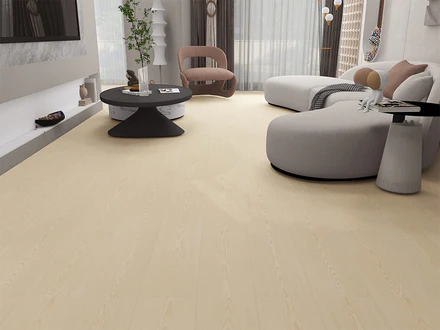
This decision matters for builders managing renovation projects, distributors stocking inventory for different climate zones, designers specifying materials for client homes, and procurement teams sourcing flooring at volume for commercial builds. Each of these groups runs into the same underlying question eventually: which waterproof core technology actually solves the specific moisture problem in front of them, and which supplier can deliver that product reliably across a full project rather than just a single sample box.
Why Traditional Flooring Struggles With Moisture in the First Place
What Actually Happens When Water Reaches a Wood-Based Floor?
Wood and many laminate products rely on fiber-based cores, and fiber absorbs water readily. Once moisture penetrates the surface layer or seeps in from below, the core begins to swell, and that swelling rarely reverses cleanly once the floor dries out again.
The damage tends to follow a predictable pattern:
- Swelling, where the core expands and pushes boards or planks against each other, creating visible ridges or buckling along seams.
- Warping, where uneven moisture absorption causes boards to curl or cup at the edges, distorting the flat surface.
- Mold growth, which develops in the damp, organic material of the core, often hidden beneath the surface until it spreads far enough to affect air quality or finish appearance.
- Delamination, where layers within an engineered wood or laminate product separate as the adhesive bond weakens under repeated moisture exposure.
- Rotting occurs with prolonged exposure, breaking down the wood fiber structurally and compromising the floor's ability to bear weight.
None of these problems are cosmetic only. They affect structural integrity, indoor air quality, and the long-term value of the space, which is exactly why moisture-resistant alternatives have become a standard consideration rather than a niche upgrade.
How Do WPC and SPC Flooring Actually Prevent This Damage?
Is Waterproof Performance Just a Marketing Claim, or Is There Real Engineering Behind It?
There is genuine engineering behind both technologies, though they arrive at waterproof performance through somewhat different core compositions.
WPC, or wood plastic composite, combines wood fiber with plastic polymers and other additives to form a core that resists water absorption far more effectively than solid wood or fiber-based laminate. The plastic component essentially seals the wood fiber away from direct water contact, preventing the swelling that would otherwise occur. This composition also gives WPC waterproof floors a noticeably softer, warmer underfoot feel compared to fully mineral-based alternatives, since the plastic and wood blend retains some natural flexibility.
SPC, or stone plastic composite, proceeds via an alternative route. Its core consists of limestone powder with stabilizers and plastic compounds, producing a dense, rigid structure that contains little organic material and thus does not absorb moisture. This composition gives SPC flooring exceptional dimensional stability, meaning it resists expansion and contraction across temperature and humidity swings far more consistently than wood-based products.
Both technologies solve the moisture problem, but they solve it through different structural approaches, which is part of why the right choice depends on the specific environment and use case rather than one technology being universally superior.
Comparing WPC and SPC Flooring Side by Side
| Comparison Factor | WPC Flooring | SPC Flooring |
|---|---|---|
| Core composition | Wood fiber and plastic polymer blend | Limestone powder and plastic compound |
| Waterproof performance | Strong resistance to moisture damage | Strong resistance to moisture damage |
| Dimensional stability | Good, with some natural flexibility | Very high, minimal expansion or contraction |
| Underfoot comfort | Softer, warmer feel | Firmer, more rigid feel |
| Suitability for heavy traffic | Moderate, suited to residential use | Strong, suited to commercial and high-traffic areas |
| Sound insulation | Generally better natural sound dampening | Moderate, often improved with underlayment |
| DIY installation | Straightforward click-lock systems available | Straightforward click-lock systems available |
Reading across this comparison, both options solve the core moisture problem effectively. The differences that actually matter for selection come down to comfort preference, expected traffic level, and whether the installation environment experiences significant temperature or humidity fluctuation that would test dimensional stability more aggressively.
Matching Flooring Type to Specific Moisture Problems
Does Every Wet Area Need the Same Solution?
Not necessarily, and this is where matching the flooring type to the actual moisture risk produces better long-term results than defaulting to a single product across an entire project.
- Bathroom humidity, with its constant cycle of steam, splashing, and standing water near fixtures, tends to favor Pure SPC Flooring, since its rigid, fully synthetic core handles sustained humidity exposure with minimal risk of any organic component degrading over time.
- Kitchen spills, which are typically sudden and localized rather than constant, are well handled by WPC waterproof floors, which combine reliable moisture resistance with a more comfortable surface for a room where people often stand for extended periods while cooking.
- Basement moisture, often involving both humidity from below and the risk of occasional flooding, benefits from WPC and SPC Flooring depending on the specific basement's exposure level, with SPC generally preferred where groundwater intrusion risk is higher and WPC suitable where humidity is the primary concern rather than standing water.
- Pet-related accidents, which introduce both moisture and the need for easy cleaning, are handled well by either WPC or SPC Flooring, since both resist staining and moisture absorption far better than traditional wood or laminate surfaces.
- Commercial cleaning routines, which often involve frequent wet mopping or industrial cleaning chemicals, are matched with SPC Flooring Commercial products, engineered for wear resistance and chemical tolerance — qualities that high-traffic commercial environments demand.
Residential Versus Commercial Selection Logic
Do Homeowners and Commercial Buyers Actually Prioritize Different Things?
Yes, and recognizing this difference helps distributors and specifiers steer customers toward the right product category rather than treating all buyers the same way.
Residential buyers typically prioritize:
- Comfort underfoot, particularly in living spaces and bedrooms where people walk barefoot regularly.
- Noise reduction, especially in multi-story homes or apartments where impact sound transfer affects daily comfort.
- Appearance and finish variety, since residential flooring often needs to match broader interior design choices, including options like wood veneer SPC flooring that replicate natural wood grain while retaining full waterproof performance.
- Straightforward installation, particularly for homeowners considering DIY SPC flooring projects without hiring professional installation crews.
Commercial buyers typically prioritize:
- Wear resistance under sustained heavy foot traffic, since commercial spaces see far more daily use than a typical home.
- Long-term dimensional stability across varying climate control conditions, particularly in retail or hospitality settings with fluctuating occupancy and temperature.
- Simplified maintenance routines that minimize labor cost across large square footage.
- Consistent supply availability for large-scale projects, often sourced through wholesale SPC flooring arrangements that support phased construction timelines.
Hybrid WPC Flooring has gained particular traction in mixed-use residential and light-commercial settings, offering a balance between comfort and durability that suits spaces falling between fully residential and fully commercial use patterns.
What Does Long-Term Maintenance Actually Look Like?
Is Waterproof Flooring Really Lower Maintenance Than Traditional Alternatives?
Generally, yes, though the specific maintenance profile differs somewhat between WPC and SPC products and depends on installation quality and daily use conditions.
Factors that affect long-term maintenance cost and effort:
- Cleaning requirements. Both WPC and SPC surfaces typically resist staining well and clean easily with standard mopping, without the careful moisture control that solid wood flooring demands during cleaning.
- Replacement frequency. Because the core materials resist the swelling and rotting that shorten the lifespan of wood-based flooring, both WPC and SPC products tend to maintain their structural integrity over a longer service period under normal use conditions.
- Surface wear patterns. Heavy foot traffic and furniture movement can affect the wear layer over time regardless of core material, making wear layer thickness and quality an important consideration alongside core waterproof performance.
- Repair and replacement ease. Click-lock installation systems common to both WPC and SPC products generally allow individual damaged planks to be replaced without disturbing the entire floor, simplifying spot repairs compared to glued-down alternatives.
Buyers evaluating lifecycle cost should weigh the upfront material investment against the reduced likelihood of moisture-related replacement, which often shifts the long-term cost comparison meaningfully in favor of waterproof composite flooring over traditional wood or laminate options in moisture-prone environments.
Evaluating a WPC or SPC Flooring Supplier Before Committing to an Order
What Separates a Dependable Manufacturer From an Inconsistent One?
Production capability and quality consistency matter just as much as the product specification itself, particularly for buyers placing large orders or establishing an ongoing supply relationship.
Practical evaluation steps for assessing a potential WPC Flooring Manufacturer or SPC supplier:
- Request documentation on core material composition and confirm the specific waterproof testing methods used to validate performance claims.
- Inquire about production capacity and delivery schedules for both standard and custom orders, especially when projects have fixed construction timelines.
- Review available certifications relevant to the target market, including any required fire safety, emissions, or material composition standards.
- Request physical samples rather than relying solely on photographs, allowing direct evaluation of surface finish, core rigidity, and locking mechanism quality.
- Confirm OEM and customization capabilities if the buyer requires specific finishes, such as wood veneer SPC flooring designs matched to a particular design specification.
- Ask about export experience and packaging standards for international shipment, since flooring products require careful handling to avoid damage during transit.
- Clarify order quantity thresholds and how those scale for wholesale SPC flooring arrangements structured around recurring distribution, as opposed to single-project procurement.
Buyers conducting due diligence on China WPC Flooring suppliers in particular should treat sample evaluation and certification documentation as non-negotiable steps before committing to a full container order, since visual similarity between samples and bulk production does not always reflect identical core composition or quality control standards.
Choosing Between Hybrid WPC and Pure SPC for a Specific Project
How Should a Final Decision Actually Get Made?
Rather than defaulting to familiar products or those with heavy marketing, a decision process weighs the installation environment's specific conditions against the end user's comfort and durability priorities.
A practical decision sequence:
- Identify the moisture exposure level of the installation space, ranging from occasional spills to sustained humidity or potential standing water.
- Determine the expected foot traffic volume and whether the space falls into residential, light-commercial, or heavy-commercial use.
- Weigh comfort priorities against durability priorities, recognizing that Hybrid WPC Flooring tends to favor comfort while Pure SPC Flooring tends to favor stability and wear resistance.
- Confirm budget constraints and how they align with the cost differences between WPC and SPC product lines from the supplier under consideration.
- Verify installation method compatibility, particularly for projects planning DIY SPC flooring installation without professional labor.
Working through this sequence with actual project conditions in mind, rather than general assumptions about which product performs better, produces a more reliable match between flooring choice and long-term performance.
Solving moisture and water damage problems through flooring selection comes down to understanding what is actually happening inside a traditional wood-based floor when water gets in, and recognizing how WPC and SPC Flooring address that vulnerability through fundamentally different core compositions built to resist swelling, mold, and structural breakdown. Whether the application calls for the comfort and warmth of Hybrid WPC Flooring in a residential living space, the rigidity and wear resistance of Pure SPC Flooring in a high-traffic commercial setting, or a carefully matched combination across different rooms within the same project, the right choice depends on matching core technology to the specific moisture risk and use pattern at hand rather than assuming one product fits every situation equally well. Zhejiang Ousikai New Material Co.,Ltd manufactures a full range of WPC and SPC Flooring products, supporting both wholesale distribution and custom OEM development for residential and commercial projects — contact the team to request samples, review certification documentation, or discuss sourcing requirements for your next flooring project.

