
 English
 中文简体
中文简体 Español
How WPC Flooring Reduces Outdoor Maintenance Burden
Outdoor flooring takes punishment that interior surfaces never face. UV exposure, standing water, seasonal temperature swings, foot traffic — over time, these forces turn even well-maintained surfaces into ongoing maintenance commitments. If you have managed a commercial terrace, a residential deck, or a hospitality outdoor area, the pattern is familiar: periodic resealing, repainting, board replacement, and the labor costs that come with each cycle. Evaluating alternatives is not just reasonable at that point — it is practically necessary. WPC flooring, as supplied by a qualified WPC Flooring Manufacturer , addresses this maintenance burden at a structural level rather than simply delaying it.
What Is WPC Flooring and Why Does the Composition Matter?
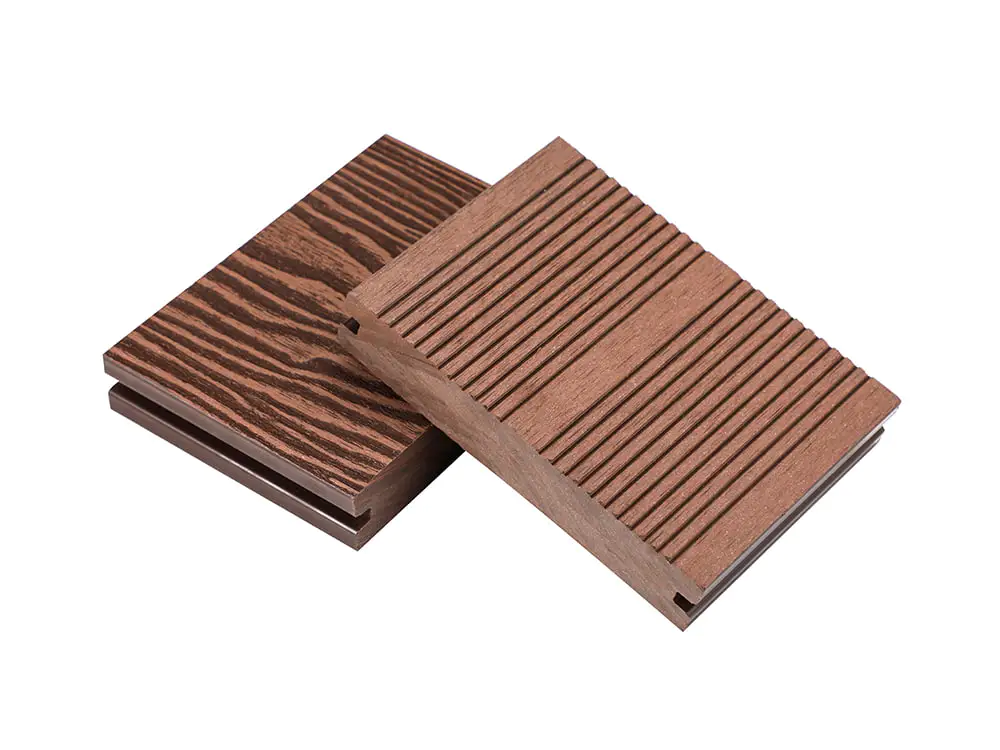
Understanding the Material Structure
WPC stands for Wood Plastic Composite. The material combines wood fiber or wood flour with thermoplastic polymers, typically processed under heat and pressure into a dense, stable board. The result retains some of the visual warmth and texture associated with natural wood while acquiring the dimensional stability and moisture resistance that wood on its own cannot provide.
The polymer component is what changes the outdoor performance equation. Natural wood absorbs water, swells, contracts, and eventually degrades at the cellular level when exposed repeatedly to moisture. The composite structure in WPC does not behave the same way. Water does not penetrate the board in the same manner, which removes one of the primary causes of outdoor flooring deterioration.
What This Means in Practice
For anyone familiar with traditional timber decking, the maintenance calendar tends to involve:
- Annual or biannual sealing to preserve water resistance
- Periodic sanding to remove surface weathering and grey discoloration
- Board replacement as cracking and splitting develop over years
- Treatment for mold or mildew that takes hold in wet climates
WPC flooring removes many of those tasks from the schedule. The material does not require sealing. It does not need painting. Surface cleaning with water and a mild detergent is generally sufficient to keep it in good condition across seasons.
The Specific Ways WPC Reduces Outdoor Maintenance
Moisture Resistance Eliminates the Resealing Cycle
Water damage is the underlying driver of much outdoor wood maintenance. When moisture enters wood fibers, it sets off a chain of consequences — expansion, contraction, surface cracking, and eventually rot. Resealing is an attempt to interrupt that chain, but it requires consistent reapplication to remain effective.
WPC flooring does not absorb water the way untreated or even sealed timber does. Rain, poolside splash, and humidity in coastal environments do not penetrate the board structure. That single property eliminates the resealing requirement entirely and removes a recurring maintenance task that typically involves both material cost and skilled labor.
Resistance to Rot and Biological Degradation
Natural wood is vulnerable to fungal decay and insect damage, particularly in humid or tropical environments. Termites, wood-boring beetles, and surface mold all exploit organic material in ways that composites simply do not support in the same way.
The polymer matrix in WPC does not provide the organic substrate that biological agents need to establish themselves. In practical terms, this means:
- No termite treatment required
- No fungicide application cycles
- Reduced mold and mildew formation on the surface
- Longer intervals between inspections in high-humidity zones
This matters especially in coastal developments, poolside installations, and covered outdoor dining areas where organic material would otherwise require frequent monitoring.
UV Stability Across Seasons
Direct sun exposure fades and dries out natural wood, resulting in surface greying and brittleness. Quality WPC products include UV stabilizers in the manufacturing process that slow color change and surface degradation under prolonged sun exposure.
This does not mean WPC is unaffected by sunlight — all outdoor materials experience some change over time. But the rate of surface degradation is notably slower, and the material does not become structurally compromised by UV exposure the way untreated timber can. For commercial applications where consistent appearance across a large deck or terrace matters, this translates to fewer aesthetic interventions over the lifespan of the installation.
Dimensional Stability in Changing Temperatures
Wood expands and contracts with temperature and humidity changes. In climates with significant seasonal variation, that movement creates gaps, warping, and nail or screw pop-out over time — all of which require maintenance attention.
WPC flooring expands and contracts at a much lower rate. When installed with appropriate expansion gaps, it maintains its profile across a wider range of conditions. Boards do not cup, bow, or develop the raised grain that makes barefoot walking on weathered timber unpleasant. For large-scale projects such as commercial terraces or waterfront boardwalks, dimensional stability across the full installation reduces the need for periodic adjustments or replacement sections.
WPC vs SPC Flooring: Outdoor Application Differences
How Do the Two Materials Compare for Exterior Use?
WPC vs SPC flooring is a comparison that comes up regularly in specification decisions, and the distinction is worth understanding clearly because the two are often discussed interchangeably despite having different core properties.
SPC, or Stone Plastic Composite, uses a calcium carbonate core that makes it extremely rigid and dimensionally stable. It performs well in indoor applications with heavy foot traffic and is highly resistant to indentation. However, that rigidity also makes it less forgiving underfoot, and its indoor-optimized engineering means it is less commonly specified for exposed exterior environments.
WPC, by contrast, has a lower-density foamed core that provides a degree of flexibility and cushioning. Underfoot, it feels softer than SPC — a meaningful difference in outdoor spaces where people spend extended time standing or walking. It also handles the thermal expansion challenges of outdoor environments somewhat better due to that core structure.
A practical comparison:
| Property | WPC Flooring | SPC Flooring |
|---|---|---|
| Core composition | Wood fiber + polymer foam | Calcium carbonate + polymer |
| Outdoor exposure suitability | Well-suited | Limited, generally indoor-focused |
| Underfoot comfort | Softer, more cushioned | Harder, more rigid |
| Thermal expansion management | More accommodating | Higher rigidity, less flex |
| Moisture resistance | Strong | Strong |
| Typical application | Decks, terraces, outdoor areas | Residential and commercial interiors |
| Maintenance frequency (outdoor) | Low | Not typically specified outdoors |
For outdoor applications, WPC flooring covers a broader range of conditions and environments. SPC has its place in high-traffic indoor areas where rigidity is an advantage, but exterior exposure tends to favor the WPC profile.
Outdoor Application Scenarios Where WPC Performs Well
Residential Decking and Garden Areas
In residential settings, decking and garden walkways are among the more maintenance-intensive outdoor surfaces. Homeowners dealing with timber decks typically face seasonal maintenance schedules that consume time and budget. WPC flooring installed in these areas reduces that cycle significantly.
The material handles garden hose cleaning, leaf debris, and pet traffic without requiring protective treatments. It also does not splinter — a practical safety advantage for households with children or for barefoot use around pools and garden areas.
Commercial Terraces and Hospitality Spaces
Restaurants, hotels, and retail environments with outdoor seating areas face a compounded version of residential maintenance challenges. Higher foot traffic, more frequent cleaning, spilled liquids, and the expectation of consistent visual presentation make material selection especially consequential.
WPC flooring in these environments reduces the time and cost associated with maintaining a presentable outdoor surface. It can be cleaned quickly, resists staining from common food and beverage spillage better than unprotected timber, and maintains its appearance across a busy season without requiring mid-season refinishing or board replacement.
Poolside Installations
Water exposure around swimming pools is continuous. Traditional timber around pool areas tends to require frequent treatment to prevent both decay and the development of slippery surfaces. WPC flooring with a grooved or textured surface profile provides drainage and maintains traction when wet while avoiding the rotting and discoloration that pool chemistry accelerates in organic materials.
Coastal and High-Humidity Environments
Salt air and consistent humidity are particularly damaging to natural wood. Coastal properties often face accelerated timber degradation that shortens maintenance intervals and increases replacement frequency. WPC flooring, not being an organic material in the same sense, is far less affected by salt exposure. It is one of the reasons coastal commercial and residential projects have increasingly turned toward composite materials for exterior surfaces.
Lifecycle Cost: Looking Past the Installation Price
Why Initial Cost Is Only Part of the Calculation
One of the more common objections to WPC flooring at the specification stage is that the upfront material cost exceeds what natural timber costs at purchase. That comparison, taken alone, favors timber. But material purchase price is only one component of what a surface actually costs over its service life.
When maintenance labor, treatment materials, periodic repairs, and eventual replacement are included in the analysis, the lifecycle cost picture shifts. A surface that requires annual sealing, occasional board replacement, and periodic professional refinishing carries cumulative costs that compound over a decade of use.
WPC flooring's reduced maintenance requirements change that equation across a multi-year horizon. The surface needs cleaning, not treatment. It does not need repainting. Board replacement due to rot, cracking, or insect damage is not a regular occurrence.
For project managers and procurement teams working on large-scale installations, this lifecycle view is often more relevant than comparing purchase prices in isolation.
Labor Savings Over Time
Maintenance is not only a material cost — it is a labor cost. Every resealing cycle, every sanding session, every board replacement involves skilled or semi-skilled labor hours. In commercial environments, it also typically involves either taking the space out of service or working around active use, which carries indirect costs.
Reducing maintenance frequency does not just save on materials. It saves on scheduled downtime, contractor engagement, and the logistical complexity of managing periodic upkeep on occupied or revenue-generating spaces.
Procurement Considerations When Sourcing WPC Flooring
What to Evaluate Beyond the Product Specification
For procurement teams sourcing WPC flooring at project scale, the product specification is only part of the evaluation. Supply reliability, installation system compatibility, and after-sales support are equally relevant to a successful outcome.
Key areas to review during supplier evaluation:
- Whether the supplier offers a consistent product range with matching accessories and fixings
- How the installation system is designed — hidden fixing systems reduce surface fastener exposure and improve longevity
- What surface textures and profiles are available for different traction and aesthetic requirements
- How the supplier handles large-volume orders and delivery time commitments
- Whether technical support is available for project-specific questions around climate compatibility and installation sequencing
China WPC Flooring Supply: Sourcing Advantages and Evaluation Points
China WPC Flooring manufacturing has developed into a mature supply sector with a range of production capabilities across product grades. For international procurement teams, sourcing from a China WPC Flooring Supplier can offer meaningful cost advantages at scale, but the quality range within that supply base is wide.
Evaluation should focus on:
- Production certifications and quality management processes
- Product testing for UV stability, moisture resistance, and load performance
- Sample evaluation under conditions relevant to the intended application environment
- References or project history in climates similar to the target installation zone
Working with a WPC Flooring Supplier that has documented export experience and the capacity to support project-scale volume reduces supply-chain risk significantly compared to unvetted sourcing.
Making the Decision: Is WPC Flooring the Right Material for Your Project?
The maintenance burden associated with outdoor flooring is real, recurring, and often underestimated at the specification stage. Natural timber looks appealing in a product catalog, but what it looks like after three seasons of outdoor exposure — and what it costs to keep it looking acceptable — is a different story. WPC flooring addresses that gap not by being a flawless material, but by being a material whose weaknesses in outdoor conditions are less severe than those of the alternatives it often replaces.
For project managers, contractors, and procurement teams working across residential, commercial, or hospitality developments, the evaluation is worth conducting with lifecycle cost and maintenance frequency at the center of the analysis rather than as secondary considerations. The material performs across a broad range of outdoor environments, handles the conditions that damage timber, and reduces the ongoing commitment of time, labor, and budget that exterior flooring typically demands. Zhejiang Ousikai New Material Co.,Ltd is a WPC Flooring Manufacturer with production capabilities spanning a range of outdoor flooring profiles, surface finishes, and installation systems. For procurement teams or project developers looking to evaluate WPC flooring options for current or upcoming projects, reaching out to their team for product specifications, sample requests, or volume pricing is a practical starting point toward a well-informed material selection decision.

